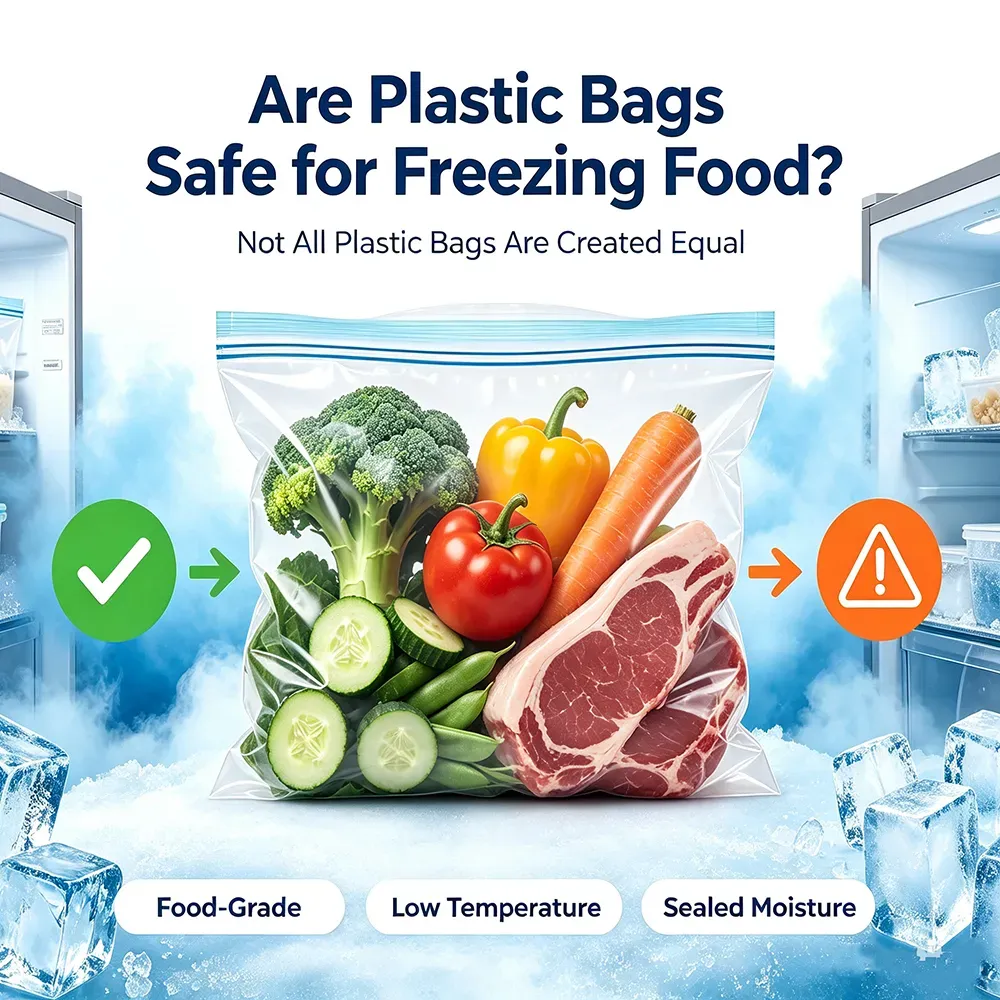


Plastic bags are widely used for storing meat, vegetables, fruits, seafood, prepared meals, and other foods in household freezers and commercial food packaging. However, many consumers and food businesses have the same question: Are plastic bags safe for freezing food?
The short answer is yes, food-grade plastic bags designed for frozen food are generally suitable for freezer storage. However, not every plastic bag is appropriate for direct food contact. The material, additives, manufacturing quality, temperature range, and intended application all matter.
This article explains what you should know before choosing plastic bags for freezing food.
Are Plastic Bags Safe for Freezing Food?
When a plastic bag is manufactured from an appropriate food-contact material and is designed for freezer applications, freezing food in the bag is generally considered safe.
Common materials used for food packaging include PE, LDPE, HDPE, and PP. These materials are widely used in different types of food packaging because they can provide flexibility, strength, moisture resistance, and good sealing performance.
Freezing temperatures also generally slow down the migration of substances from plastic into food. Therefore, the fact that food is stored at a low temperature does not by itself make a suitable food-grade plastic bag unsafe.
However, consumers should always distinguish between food-grade plastic bags and general-purpose plastic bags.
A plastic bag designed for garbage, industrial products, shipping, or other non-food applications should not automatically be considered suitable for direct food contact.
What Plastic Materials Are Commonly Used for Frozen Food?
Different plastic materials offer different properties for food and freezer applications.
PE Plastic Bags
PE, or polyethylene, is one of the most commonly used materials for food packaging. PE bags can offer good flexibility, moisture resistance, and sealing performance.
They are commonly used for frozen vegetables, meat, seafood, fruits, and other food products.
LDPE Plastic Bags
LDPE has excellent flexibility and relatively good low-temperature performance. This makes it a popular choice for flexible food packaging and freezer bags.
LDPE bags can also be produced in different thicknesses depending on the application.
For products with sharp edges or bones, a thicker LDPE film may provide better resistance to puncturing and tearing.
HDPE Plastic Bags
HDPE has a higher stiffness and good strength compared with LDPE. It is often used where greater rigidity and durability are required.
However, the suitability of a particular HDPE bag for freezing food depends on the formulation, thickness, sealing method, and manufacturer's specifications.
PP Plastic Bags
PP, or polypropylene, offers good chemical resistance and temperature performance. It is widely used in food packaging.
However, not every PP bag is automatically suitable for every freezer application. Buyers should check the manufacturer's recommended temperature range and intended use.
Why Is Food-Grade Certification Important?
The term food-grade is extremely important when selecting plastic bags for food packaging.
Food-contact packaging is designed and tested according to applicable regulatory requirements. Depending on the target market, manufacturers may need to provide relevant documentation and testing.
For example, food packaging products sold in different markets may be evaluated against requirements such as:
FDA food-contact requirements
EU food-contact regulations
EU 10/2011
EC 1935/2004
REACH requirements where applicable
Food migration testing
Declaration of Compliance (DoC)
These documents can help buyers verify whether a plastic bag is suitable for its intended food-contact application.
For commercial food packaging, buyers should ask the supplier for the relevant compliance documents rather than simply assuming that a transparent or clean-looking plastic bag is food-safe.
Can You Use Any Plastic Bag in the Freezer?
No.
This is one of the most important points to understand.
A plastic bag may look similar to a freezer bag but still be unsuitable for food contact.
For example, the following products should not be automatically used to package food:
Garbage bags
Industrial packaging bags
General shipping bags
Mailing bags
Plastic bags made from unknown materials
Bags without food-contact information
Bags intended for non-food products
The appearance of a plastic bag does not tell you whether it has been manufactured for food contact.
If you are purchasing bags for frozen food, look for clear information about material, food-contact suitability, temperature range, thickness, and compliance.
Can Plastic Bags Handle Freezing Temperatures?
Many food packaging plastics can perform well at freezer temperatures, but their performance depends on the specific formulation and bag design.
Freezing can make some plastic films stiffer or less flexible. A bag that performs well at room temperature may behave differently when exposed to very low temperatures.
For this reason, frozen food packaging should be evaluated for:
Low-temperature flexibility
Impact resistance
Tear resistance
Puncture resistance
Seal strength
Leakage resistance
Film thickness
Overall durability
For example, packaging frozen chicken wings, fish, ribs, or other products with sharp bones requires a bag with sufficient puncture resistance.
A bag that is technically food-grade but too thin for the application may still be a poor packaging choice.
Should You Put Hot Food Directly Into a Plastic Freezer Bag?
Generally, no.
There is an important difference between a plastic bag that is suitable for freezing and one that is suitable for high-temperature applications.
For example, if you have just cooked soup, stew, meat, or another hot food, you should not assume that a freezer bag can safely handle the food while it is still extremely hot.
A better process is:
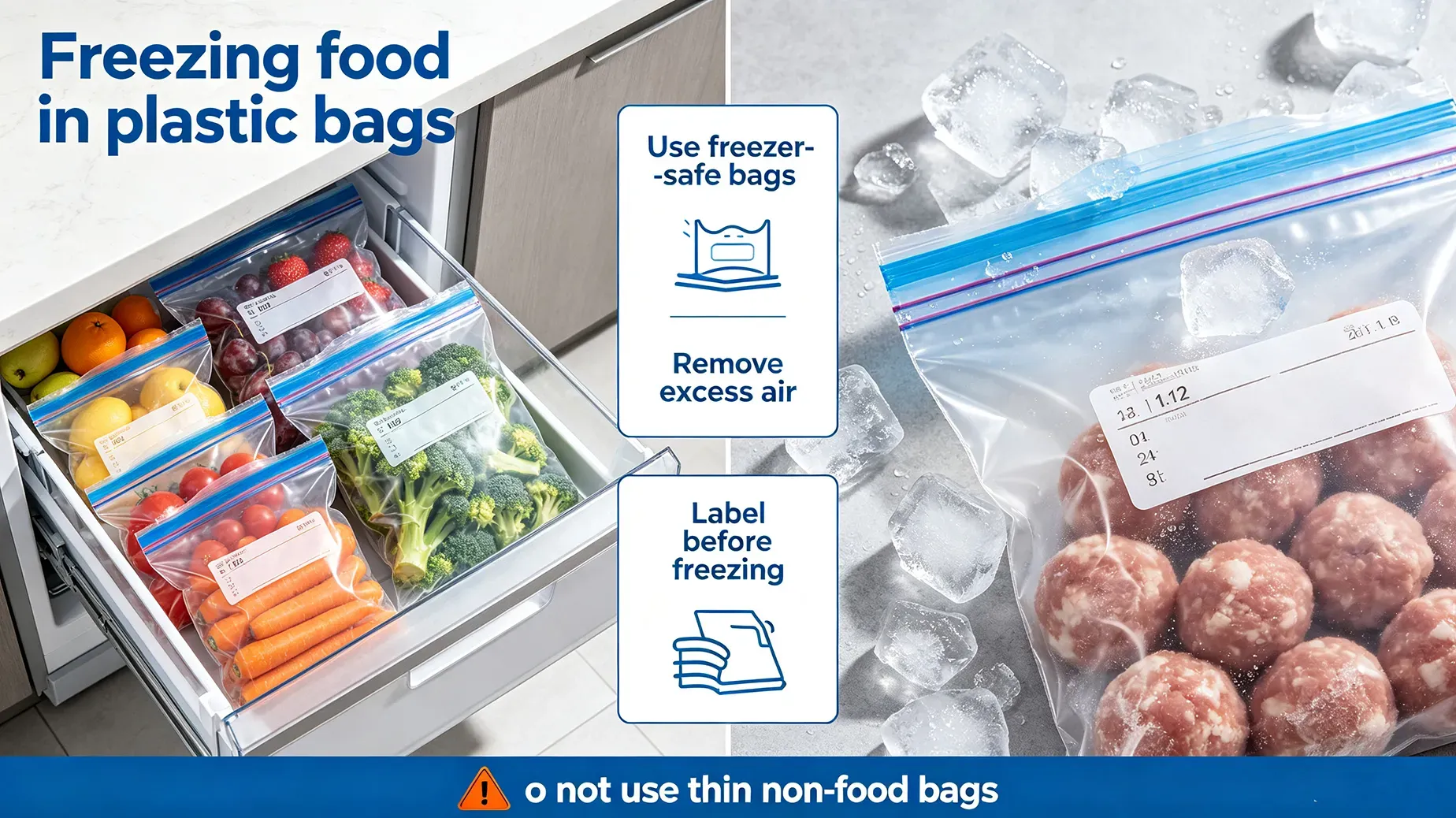
Cooked food → Appropriate cooling → Food-grade freezer bag → Remove excess air → Seal → Freeze
If a plastic bag is specifically designed and tested for hot-fill applications, it may have different capabilities. But this should be confirmed with the manufacturer.
Can Frozen Food Bags Be Used in a Microwave?
Another common mistake is assuming that freezer-safe means microwave-safe.
These are different requirements.
A bag designed for freezing may not be designed for microwave heating. If the manufacturer does not specifically state that the bag is suitable for microwave use, it is better to transfer the food to an appropriate microwave-safe container before heating.
Always follow the manufacturer's instructions for temperature limits and intended applications.
How Should You Choose a Plastic Bag for Frozen Food?
When purchasing plastic bags for frozen food, consider more than just price.
1. Check the Material
Ask whether the bag is made from PE, LDPE, HDPE, PP, or another suitable food-contact material.
2. Confirm Food-Contact Suitability
Ask the supplier whether the product is food-grade and suitable for direct food contact.
3. Check the Temperature Range
Ask:
Is this bag suitable for frozen food packaging?
You can also ask:
What is the recommended temperature range for this bag?
4. Consider Thickness
Different foods require different film thicknesses. Lightweight vegetables may not require the same bag strength as meat or seafood with bones.
5. Check Sealing Performance
A strong heat seal or reliable closure helps prevent leakage and protects food from exposure to moisture and air.
6. Consider Puncture Resistance
Frozen meat, seafood, bones, and other hard products can damage thin plastic film. A suitable thickness and material structure can help reduce this risk.
Does Freezing Plastic Food Bags Affect Food Quality?
The purpose of a freezer bag is not only to protect food safety but also to help maintain food quality.
A suitable plastic bag can help reduce:
Moisture loss
Freezer burn
Odor transfer
Contact with air
Contamination
Leakage
Removing excess air before sealing can also help protect frozen food quality.
For long-term freezer storage, the packaging needs to maintain its integrity throughout the storage period.
What Should Food Packaging Manufacturers Consider?
For plastic packaging manufacturers, frozen food bags should be designed according to the customer's actual application.
Important factors include:
Material: PE, LDPE, HDPE, PP, or multilayer structures
Thickness: Customized according to product weight and puncture requirements
Size: Designed according to the food product and filling volume
Sealing: Heat sealing or other suitable closure methods
Printing: Custom branding and product information can be added where required
Compliance: Food-contact documentation and migration testing should be considered according to the target market
Performance: Low-temperature flexibility, tensile strength, tear resistance, and seal strength should be evaluated.
For international buyers, it is particularly important to communicate the intended application to the manufacturer before placing an order.
Final Thoughts
So, are plastic bags safe for freezing food?
Yes, food-grade plastic bags specifically designed for food and freezer applications are generally suitable for freezing food. PE, LDPE, HDPE, and PP are commonly used materials for food packaging, but the suitability of a specific bag depends on its formulation, manufacturing quality, intended application, and temperature range.
The biggest mistake is assuming that every plastic bag is suitable for food simply because it looks clean or transparent.
For consumers, choose bags clearly intended for food and freezer use. For commercial buyers, ask manufacturers about food-contact compliance, migration testing, material composition, temperature range, thickness, and puncture resistance.
Choosing the right plastic bag is not only about protecting food from the freezer-it is also about ensuring the packaging performs reliably throughout the entire storage process.