



Product Overview
A hot seal plastic bag is a flexible plastic packaging bag designed to be securely closed using heat sealing equipment. By applying controlled heat and pressure to the sealing area, the bag forms a strong and tamper-resistant closure that helps protect products from dust, moisture, contamination, and handling damage.
Hot seal plastic bags are available in different materials, thicknesses, sizes, colors, and printing options. They can be manufactured for industrial packaging, food packaging, retail products, electronic components, medical supplies, hardware, garments, and other commercial applications.
As a professional plastic packaging manufacturer, we provide custom hot seal plastic bag solutions according to product size, material requirements, sealing method, printing design, and packaging specifications.
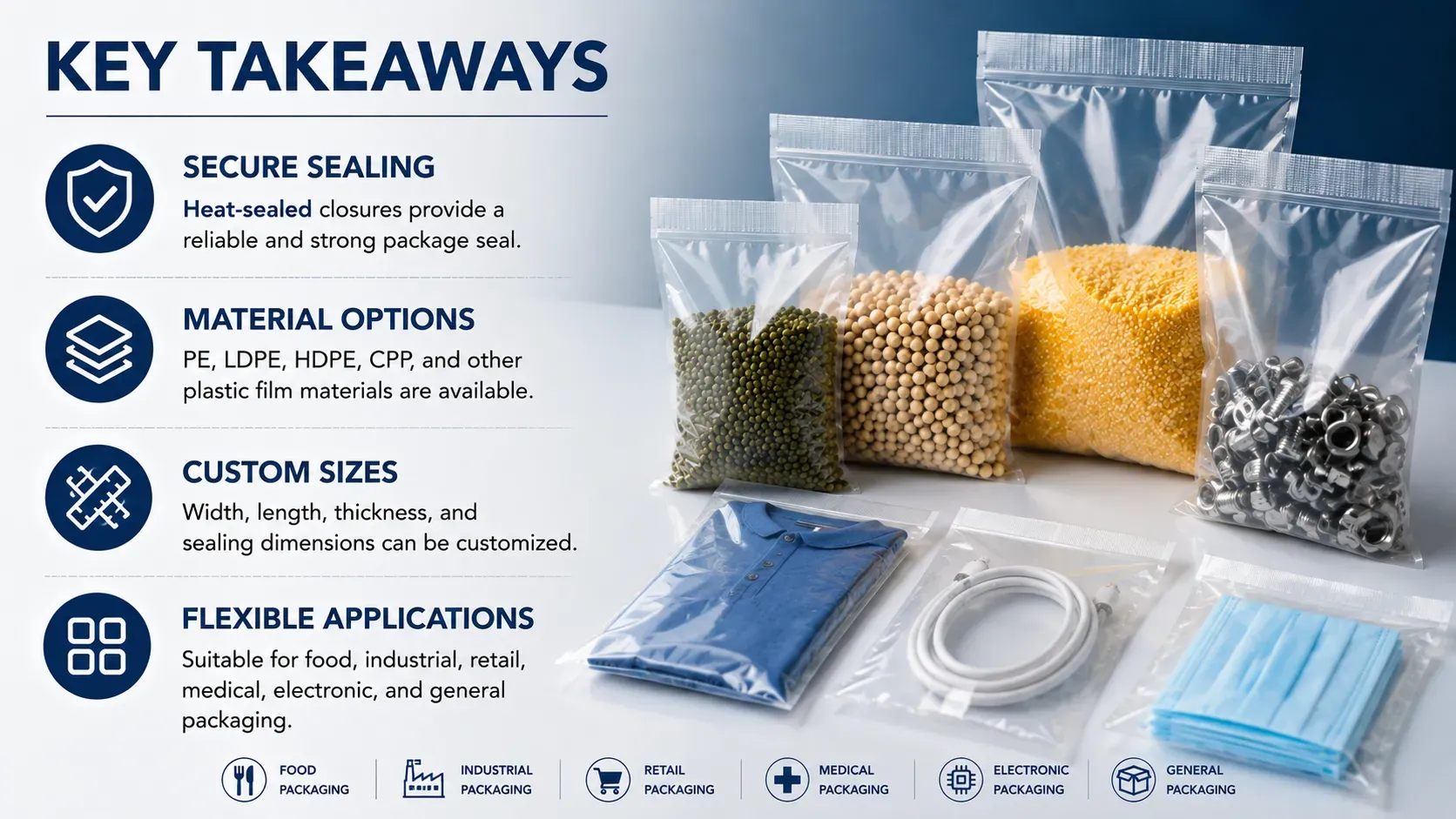
Key Takeaways
- Secure Sealing: Heat-sealed closures provide a reliable and strong package seal.
- Material Options: PE, LDPE, HDPE, CPP, and other plastic film materials are available.
- Custom Sizes: Width, length, thickness, and sealing dimensions can be customized.
- Flexible Applications: Suitable for food, industrial, retail, medical, electronic, and general packaging.
- Custom Printing: Logo, product information, warning text, barcodes, and brand graphics can be printed.
- Moisture Protection: Helps protect packaged products from moisture, dust, and external contamination.
- Factory Direct: Custom production with flexible specifications and bulk-order support.
Hot Seal Plastic Bag: Context And History
Heat sealing has become an important packaging technology because it provides a simple and effective method for closing flexible plastic packaging. As plastic films developed during the 20th century, heat-sealing technology became widely used in food, consumer goods, industrial, and commercial packaging.
Traditional packaging methods often depended on adhesive, string, clips, or mechanical closures. Heat sealing offered a cleaner and more consistent alternative because the plastic film itself can be fused together.
Today, the hot seal plastic bag is widely used because automated heat-sealing machines can create consistent seals at high production speeds. Improvements in polyethylene and polypropylene films have also increased the range of applications available for heat-sealed plastic packaging.
What Are Hot Seal Plastic Bags?
A hot seal plastic bag is a plastic bag designed to be closed by applying heat to a specific sealing area. The heat softens or melts the thermoplastic film, and pressure then bonds the layers together as the material cools.
Unlike ziplock or adhesive bags, hot seal plastic bags normally require a heat-sealing machine or heat-sealing device for final closure.
The sealing temperature, pressure, and dwell time depend on the plastic material and film thickness. Proper control of these parameters helps create a strong and uniform seal without damaging the packaging or its contents.
Common structures include:
Flat plastic bags
Three-side seal bags
Header bags
Industrial poly bags
Food packaging bags
Printed plastic bags
Custom heat-sealable pouches
Gusseted plastic bags
Hot Seal Plastic Bag in Food Packaging: Importance
A hot seal plastic bag can provide an effective barrier against external contaminants during food storage and transportation. Once properly sealed, the package can help reduce exposure to dust, moisture, oxygen, and handling contamination.
For food applications, the selected plastic film must be appropriate for the intended food-contact environment. Material selection should consider temperature resistance, moisture resistance, transparency, mechanical strength, and regulatory requirements.
Typical food packaging applications include:
Snacks
Bakery products
Dried foods
Grains
Nuts
Candy
Fresh produce
Frozen foods
Meat and seafood packaging
Powdered food products
For food-contact applications, customers can request suitable food-grade materials and relevant compliance documentation according to the destination market.
Hot Seal Plastic Bags vs. Heat-Sealable Pouches
Although these terms are sometimes used interchangeably, there can be differences in structure and application.
A hot seal plastic bag generally refers to a flexible plastic bag that is closed using heat. A heat-sealable pouch may have a more specialized multi-layer structure designed for improved barrier properties, appearance, or filling performance.
The right option depends on the product being packaged, required barrier performance, sealing equipment, and desired packaging format.
Using Hot Seal Plastic Bags for Storage and Packaging
A hot seal plastic bag can be used for packaging products that require a secure closure during storage, handling, and transportation.
For industrial products, the bag can help keep components organized and protected from dust and moisture. For retail products, custom printing can provide product information and brand visibility.
For food products, the bag can be manufactured with suitable food-contact plastic film and sealing properties.
Common packaging uses include:
| Product Type | Typical Application |
|---|---|
| Food | Snacks, bakery products, dried foods, grains |
| Clothing | Garments, socks, textiles |
| Hardware | Screws, bolts, small components |
| Electronics | Small electronic parts and accessories |
| Industrial Products | Components and spare parts |
| Retail Products | Consumer goods and accessories |
| Medical Supplies | Selected non-sterile packaging applications |
| Agricultural Products | Seeds, produce, and related products |
Composition: Plastic and Heat-Sealable Materials
The performance of a hot seal plastic bag depends heavily on its film material and structure. Different materials offer different levels of strength, flexibility, transparency, heat-sealing performance, and barrier protection.
Depending on the application, bags can be manufactured from single-layer films or customized multi-layer structures.
Common Materials Used in Hot Seal Plastic Bags
LDPE: Flexible, transparent, lightweight, and commonly used for general-purpose packaging.
HDPE: Provides higher stiffness and good strength for industrial and retail packaging.
LLDPE: Offers good puncture resistance, toughness, and flexibility.
CPP: Provides good clarity and heat-sealing performance and is suitable for various food and retail applications.
BOPP: Offers excellent clarity, stiffness, printability, and visual appeal when combined with a suitable heat-sealable layer.
PA/PE: A multi-layer structure that can provide improved strength and barrier performance for demanding packaging applications.
Material selection should be based on the product characteristics, sealing equipment, storage conditions, transportation requirements, and applicable regulations.
Characteristics of Hot Seal Plastic Bags
A high-quality hot seal plastic bag can offer several practical characteristics:
Strong and consistent heat seal
Good tear and puncture resistance
Flexible film construction
Excellent product visibility when transparent
Moisture and dust protection
Lightweight packaging
Customizable dimensions
Multiple thickness options
Custom printing capability
Suitable for automated packaging lines
Easy storage and transportation
The actual performance depends on the selected material, film thickness, bag structure, sealing conditions, and manufacturing specifications.
Advantages of Hot Seal Plastic Bags
Strong Closure
Heat sealing creates a continuous bonded area, reducing the possibility of accidental opening during transportation and handling.
Improved Product Protection
The sealed structure helps protect products against dust, moisture, and external contaminants.
Customizable Design
Bag dimensions, film thickness, color, transparency, printing, and sealing configuration can be customized.
Efficient Packaging
Heat sealing is compatible with manual, semi-automatic, and fully automatic packaging operations.
Cost-Effective
Plastic film is lightweight and can be manufactured efficiently in large quantities, making heat-sealed bags suitable for bulk packaging requirements.
Professional Appearance
Clear films allow products to remain visible, while printed films can improve branding and product presentation.
Wide Application Range
From food and garments to industrial components and retail products, heat-sealed plastic bags can serve many packaging requirements.
Application Scenarios for Hot Seal Plastic Bags
A hot seal plastic bag can be used across many industries.
Food Packaging
Suitable for snacks, bakery products, dried foods, grains, candy, nuts, and other packaged food products when appropriate food-contact materials are selected.
Garment Packaging
Used for shirts, trousers, underwear, socks, textiles, and other clothing products.
Industrial Packaging
Suitable for screws, bolts, mechanical components, spare parts, tools, and other small industrial products.
Electronic Components
Transparent heat-sealed bags can help organize and protect small electronic components and accessories.
Retail Packaging
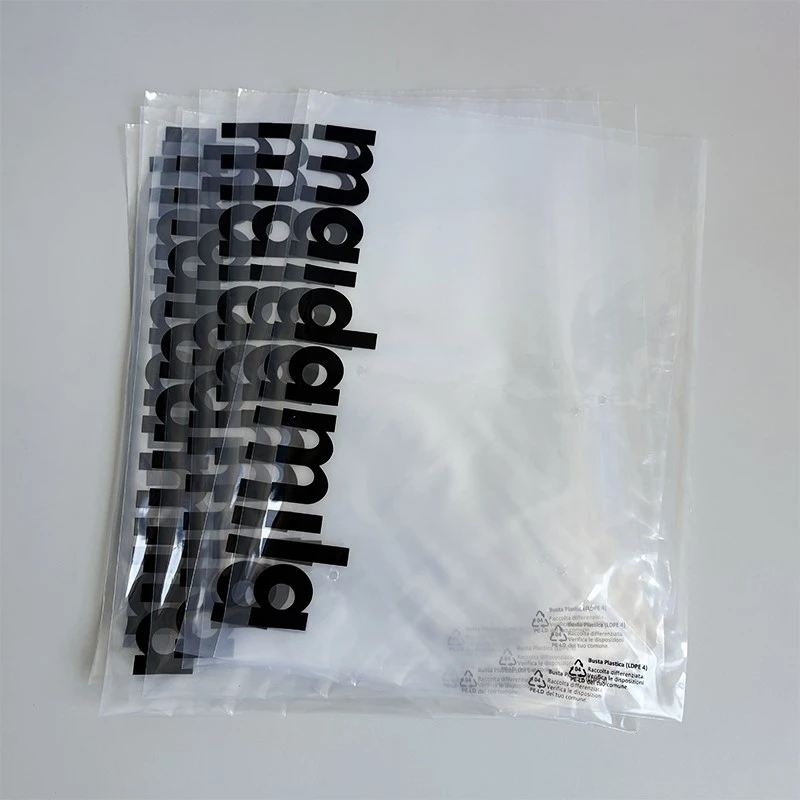
Custom printing can display logos, product information, barcodes, instructions, and promotional graphics.
Agricultural Packaging
Can be used for seeds, vegetables, agricultural accessories, and other products requiring basic dust and moisture protection.
How to Use Hot Seal Plastic Bags Effectively
Using a hot seal plastic bag correctly requires selecting the appropriate film and setting the heat-sealing equipment according to the material.
A typical process is:
Select the correct bag size and material.
Place the product inside the bag.
Remove excess air if necessary.
Position the open edge correctly in the sealing area.
Set the appropriate sealing temperature.
Apply heat and pressure for the required dwell time.
Allow the seal to cool and stabilize.
Check the seal for wrinkles, incomplete bonding, or leakage.
The ideal temperature and sealing time vary according to the film material and thickness. Trial sealing is recommended before large-scale production.
Storage Method
Store unused hot seal plastic bags in a clean and dry environment.
Recommended storage conditions include:
Keep away from direct sunlight.
Avoid high temperatures.
Protect from moisture.
Keep away from sharp objects.
Store in clean packaging.
Avoid excessive compression.
Follow the manufacturer's recommended storage conditions.
Proper storage helps maintain film quality and sealing performance before use.
How to Dispose of Hot Seal Plastic Bags
The disposal method depends on the plastic material, local recycling infrastructure, and applicable waste-management regulations.
For recyclable plastic bags, users should separate the packaging from other waste and send it to an appropriate recycling collection system where available.
For food-contaminated packaging, local recycling rules should be followed because contamination can affect recyclability.
Do not assume that every plastic bag is biodegradable or compostable simply because it is lightweight or environmentally friendly in appearance. Disposal instructions should always follow the actual material composition and applicable local requirements.
For custom sustainable packaging, recycled-content or certified compostable materials can also be considered when they are suitable for the intended application.
Choosing Hot Seal Plastic Bags
When selecting a hot seal plastic bag, buyers should consider the following factors:
1. Material
Choose PE, CPP, BOPP-based structures, PA/PE, or another suitable material according to the product requirements.
2. Bag Size
The bag should provide sufficient space for the product while minimizing unnecessary packaging material.
3. Film Thickness
Thicker film can provide additional strength, while thinner film may reduce material consumption and packaging weight.
4. Sealing Performance
Make sure the film is compatible with the customer's heat-sealing equipment and operating conditions.
5. Transparency
Clear film is useful when product visibility is important, while colored or opaque films can provide privacy and branding options.
6. Printing
Custom flexographic or gravure printing can be used for logos, product information, barcodes, instructions, and promotional graphics depending on the packaging structure.
7. Food-Contact Requirements
For food applications, select suitable food-grade materials and request the required compliance documentation.
8. Order Quantity
Bulk orders can usually provide better production efficiency and unit pricing. MOQ depends on bag size, material, printing, and customization requirements.
9. Supplier Capability
A reliable manufacturer should be able to provide material selection, size customization, printing, sealing configuration, quality control, and shipping support.
Conclusion
A hot seal plastic bag provides a practical and versatile packaging solution for products that require a secure heat-sealed closure. Its combination of strong sealing, flexible materials, customizable dimensions, and broad application range makes it suitable for food, retail, garment, agricultural, electronic, and industrial packaging.
Choosing the right material, thickness, size, sealing conditions, and printing method is essential for achieving the required packaging performance. For large-volume or customized packaging projects, working directly with an experienced manufacturer can also simplify material selection, sampling, production, inspection, and delivery.
FAQ
What is a hot seal plastic bag?
A hot seal plastic bag is a plastic packaging bag that is closed by applying controlled heat and pressure to the open edge, creating a bonded seal.
What materials can be used for hot seal plastic bags?
Common materials include LDPE, HDPE, LLDPE, CPP, BOPP-based structures, and multi-layer films such as PA/PE. The best material depends on the packaging application.
Are hot seal plastic bags suitable for food packaging?
Yes. Suitable food-grade materials can be used for food packaging applications. The specific material and compliance requirements should be selected according to the food product and destination market.
Can hot seal plastic bags be customized?
Yes. Customization can include bag size, thickness, material, color, transparency, printing, sealing configuration, and packaging method.
Can hot seal plastic bags be printed?
Yes. Depending on the film structure and order requirements, logos, product information, barcodes, instructions, and other graphics can be printed.
What products can be packed in hot seal plastic bags?
They can be used for food, garments, textiles, hardware, electronic components, industrial parts, agricultural products, retail goods, and many other products.
What determines the sealing temperature?
The appropriate temperature depends mainly on the plastic material, film thickness, sealing equipment, sealing pressure, and dwell time. Production trials should be performed to determine the optimal settings.
Are hot seal plastic bags recyclable?
Some plastic structures are recyclable, but recyclability depends on the material composition and local recycling infrastructure. Multi-layer structures may have different recycling requirements.
What is the MOQ for custom hot seal plastic bags?
MOQ depends on the bag size, material, thickness, printing requirements, and customization. Contact the manufacturer for a project-specific quotation.
Why choose a factory-direct supplier?
A factory-direct supplier can provide more direct control over material selection, production, printing, quality inspection, customization, and bulk-order coordination.
