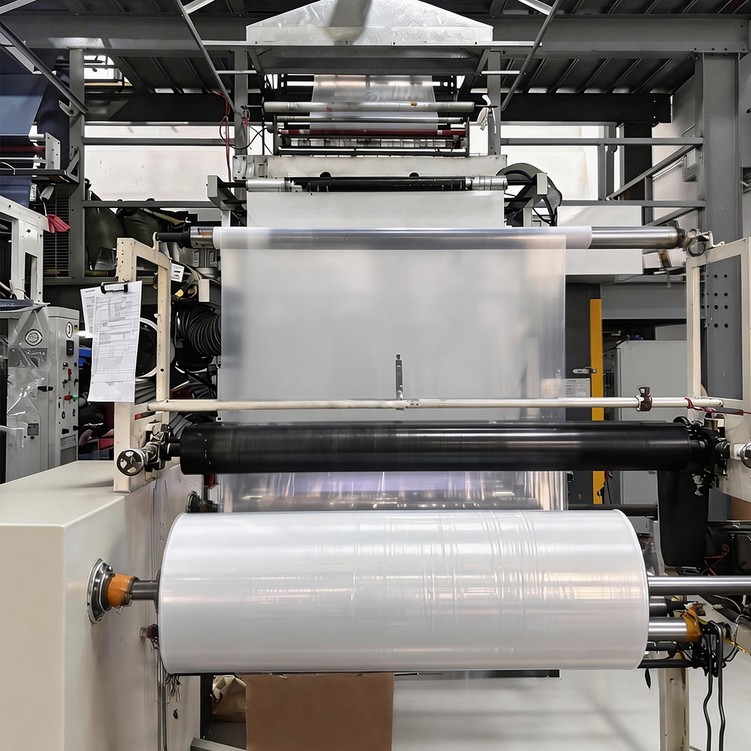

Introduction: Why Choosing the Right PE Film Matters
In the world of packaging and industrial manufacturing, polyethylene film (PE film) is the most common - yet most frequently mis-specified - material. Making the wrong choice leads to higher in-transit damage rates (punctures, tears) and over-packaging (increased carbon footprint and material costs).
Whether you need soft poly mailers for e-commerce shipments or heavy-duty moisture barriers for construction sites, understanding density, processing technology, and additive systems is the first step toward making an informed decision.
This article draws on over 15 years of film extrusion experience and ASTM international standards to provide a clear framework for selecting the right PE film for your needs.
The Three Basic Types of Polyethylene Film
In industrial applications, not all "PE films" are the same. Based on density and molecular chain structure, mainstream polyethylene films fall into three categories:
1. LDPE (Low-Density Polyethylene) - The "Soft & Clear" Option
Characteristics: Highly branched molecular chains, low crystallinity. Offers excellent transparency, good heat sealability, and impact resistance.
Best For: Garment bags, food wrap films, lamination substrates.
Limitation: Relatively weak puncture and tear strength - not suitable for heavy or sharp-edged products.
2. LLDPE (Linear Low-Density Polyethylene) - The "Tough & Tear-Resistant" Option
Characteristics: More regular molecular chains via copolymerization. Offers far superior tensile strength and puncture resistance compared to LDPE, plus excellent elongation.
Best For: Heavy-duty bags, stretch wrap films, trash bags, bulk chemical liners.
Industrial Advantage: At the same thickness, LLDPE is 50–100% tougher than LDPE.
3. HDPE (High-Density Polyethylene) - The "Stiff & Rigid" Option
Characteristics: Dense molecular packing, high crystallinity. Feels stiff, opaque, and grease-resistant, but prone to cracking when folded (poor flex-crack resistance).
Best For: Grocery bags, food packaging substrates, conduit protection films.
Why Choose HDPE: If you need the film to hold a bag shape (e.g., for open-mouth bags), HDPE is the best choice.
Expert Tip: In industrial applications, over 80% of high-performance packaging films use a blend of LDPE and LLDPE. By adjusting the blend ratio, you can precisely balance transparency and strength.

A 5-Step Selection Guide Based on Application
To make a systematic decision, follow these five steps:
Step 1: Evaluate Physical Stress - Puncture vs. Tensile
| Risk | Recommended Material System | Key Test |
|---|---|---|
| Sharp edges (hardware, screws, castings) | High LLDPE content (>70%) or add EVA | Puncture resistance (ASTM D4833) |
| Heavy loads (25kg fertilizer, resin pellets) | LLDPE + mLLDPE (metallocene PE) | Dart drop impact (ASTM D1709) |
| Shrink wrapping (tight conformity needed) | LDPE (high shrink ratio) | Heat shrink ratio (ASTM D2732) |
Step 2: Evaluate Environmental Exposure
Outdoor / long-term storage: Must include UV stabilizers (carbon black or HALS). Unstabilized PE film will become brittle and crack within 3–6 months of sunlight exposure.
High humidity / water contact: PE is inherently waterproof, but ensure heat seal integrity. A 3-layer co-extruded structure with the sealant layer on the inside is recommended.
Step 3: Evaluate Heat Seal Requirements
Automated packaging lines (VFFS/HFFS): Require a wide heat seal window. LLDPE or specialized heat-seal resins are recommended to prevent "false seals" due to temperature fluctuations.
Manual / basic sealing: LDPE is generally sufficient.
Step 4: Evaluate Regulatory & Sustainability Trends (2025–2026)
Food contact: Must comply with FDA 21 CFR 177.1520 or EU 10/2011.
Environmental compliance:
EU PPWR: Films with ≥30% PCR (post-consumer recycled) content are strongly preferred.
Recyclability: Choose mono-PE structures (avoid laminations with PET).
Step 5: Evaluate Processing Technology - Blown vs. Cast Film
| Process | Blown Film | Cast Film |
|---|---|---|
| Strength | High, balanced in both directions | Moderate, directional |
| Tolerance | Slightly wider thickness variation | Extremely tight thickness tolerance |
| Clarity | Good (can be hazy) | Excellent, high gloss |
| Best For | Heavy-duty bags, industrial liners | High-speed automated packaging, lamination substrates |
Key Physical Performance Metrics Explained
When speaking with suppliers, focus on these four core metrics:
Thickness (Gauge / Micron)
Common misconception: Thicker is always stronger. In reality, metallocene (mLLDPE)-modified films at 40 microns can offer better puncture resistance than standard 60-micron LDPE.
Dart Drop Impact
Simulates the risk of a heavy object dropping onto the film and causing rupture.
Elmendorf Tear Strength
Low tear strength: Desirable for easy-open features (e.g., poly mailers).
High tear strength: Essential for industrial moisture barriers.
Coefficient of Friction (COF)
Low COF (<0.2): Ideal for automated filling lines - film slides easily.
High COF (>0.5): Prevents pallet loads from slipping during stacking.
Advanced Selection for Specialized Industrial Needs
1. Anti-Static / Conductive Requirements (Electronics / Explosives)
Options:
Anti-static additive: Surface resistivity 109–1012109–1012 ohms (humidity-dependent, migratory).
Permanent conductive layer (carbon black): Surface resistivity <106<106 ohms (opaque black).
Note: Anti-static additives lose effectiveness in very dry conditions; carbon black is opaque.
2. Anti-Fog Requirements (Fresh Produce Packaging)
Solution: Add anti-fog agents to LLDPE or LDPE to cause condensation to form a clear film rather than water droplets.
3. High-Barrier Requirements (Oxygen / Moisture Sensitive)
Reality check: Plain PE film has poor oxygen barrier (OTR > 2000 cc/m²/day). For high barrier, you must use multi-layer co-extrusion with an EVOH (ethylene vinyl alcohol) layer.
Common Mistakes & How to Evaluate Suppliers
Three Traps to Avoid:
Only looking at price per ton
Cheap calcium-carbonate-filled films (chalk) are low-cost but suffer from dramatically reduced impact strength and are non-recyclable.
Ignoring "processability"
Some high-strength formulations perform well in lab tests but stick to rollers on automatic packaging machines (unstable COF).
Single-source reliance
Always ask for RoHS, REACH, and FDA test reports.
How to Evaluate a Supplier?
Quality control: Do they have in-line thickness gauging and a universal testing machine (tensile tester) in their lab?
R&D support: Can they adjust slip agent or anti-static additive levels based on your specific packaging equipment (e.g., Heidelberg automatic line)?
FAQ
Q: Can LDPE and LLDPE be used interchangeably?
A: No, not 1:1. LLDPE requires higher extrusion temperatures and has different heat-seal behavior. Blending should be done under engineering guidance.
Q: How can I quickly test film quality?
A: Take a small strip and stretch it. Good film will uniformly "whiten" and form a neck before breaking. Poor (high-calcium) film will snap like paper.
Q: Is "biodegradable PE film" real?
A: Most "oxo-degradable" PE simply fragments into microplastics and does NOT meet true biodegradability standards (e.g., EN13432). Look for PBAT/PLA-based materials instead.
Conclusion: Your Next Steps
Choosing the right polyethylene film isn't just a material decision - it's a balance between logistics efficiency, product protection, and sustainable costs.
If you are looking for:
PCR-content eco-friendly poly mailer films
High-strength LLDPE liners for heavy-duty industrial packaging
OEM/ODM customization (color, printing, widths up to 3 meters)
Contact us for sample testing. Our technical team can provide a free "Film Selection Assessment Form" - simply tell us your product weight, shape, and shipping environment, and we will recommend a formulation within 24 hours.