


Reusable and single-use plastic bags are ubiquitous in the packaging industry and daily life. But do you really understand the fundamental differences between them? For purchasing managers, packaging suppliers, and environmentally conscious consumers, understanding the differences between these two types of bags is key to making the right choice.
This article provides a comprehensive comparison guide from the perspectives of design purpose, material thickness, sealing structure, load-bearing capacity, cost, environmental impact, and application scenarios.
1. Design Purpose: Durability vs. Convenience
Reusable Plastic Bags: Designed for Multiple Uses
The core design goal of reusable plastic bags is durability. They need to withstand repeated opening and closing, bearing weight, and washing without affecting their performance.
Typical Products:
Thickened self-sealing bags, sliding zipper bags, EVA zipper bags, non-woven shopping bags, vacuum storage bags.
Application Scenarios:
Long-term food storage, clothing storage, travel repackaging, e-commerce return packaging.
Single-use plastic bags:
Designed for single use
The core design goals of single-use plastic bags are low cost and convenience. They are designed to complete a single "fill-transfer-dispose" process, used only once.
Typical products:
Supermarket vest bags, express delivery bags, flat bags, fresh produce bags, roll garbage bags.
Application scenarios: Supermarket shopping, takeout packaging, e-commerce logistics, waste disposal.
2. Materials and Thickness: The most obvious physical differences
The most obvious difference between reusable bags and single-use bags lies in their thickness and material.
Thickness comparison:
Reusable plastic bags: 50–200 microns, thicker and more durable
Single-use plastic bags: 8–40 microns, lighter and thinner, lower cost
Material composition: Reusable bags: Commonly used polypropylene (PP, No. 5), EVA, or thickened low-density polyethylene (LDPE). These materials have better toughness and weather resistance.
Disposable Bags: Mostly made of ordinary high-density polyethylene (HDPE, No. 2) or low-density polyethylene (LDPE), with some recycled materials added to reduce costs.
3. Sealing Structure: Simple vs. Precision
Reusable Bags:
Complex sealing system
To achieve multiple openings and resealings, reusable bags are typically equipped with a precision sealing structure:
Double-bonded self-sealing strip: Can be opened and closed thousands of times
Sliding zipper:
Smooth and durable
EVA zipper: Good sealing performance
Hook and loop fasteners or snaps
Disposable Bags:
Simple or no seal
The sealing design of disposable bags is extremely simplified:
Heat-sealed closed seal: Cannot be repeatedly opened
Single-use adhesive strip: Ineffective once torn
No seal design: Like an open bag
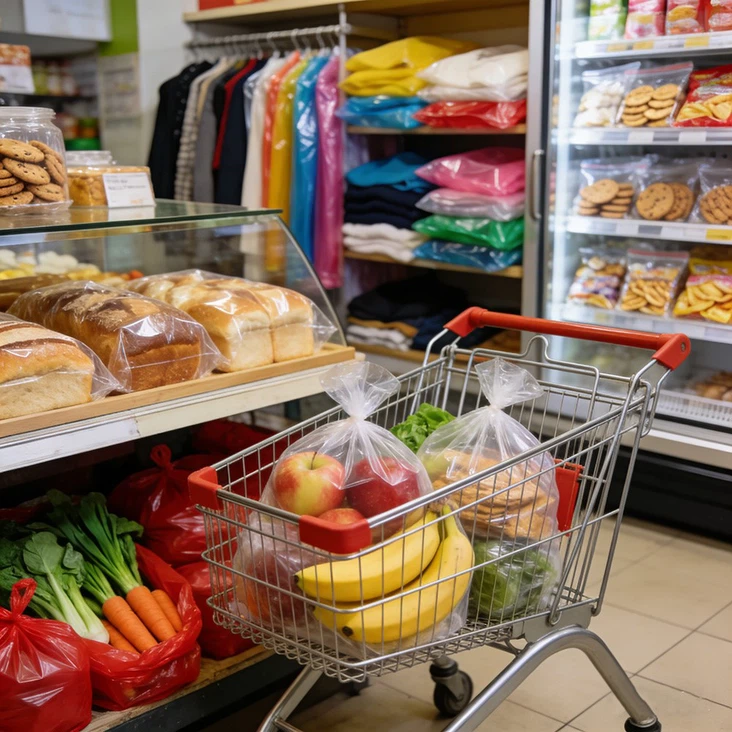
4. Load Capacity: Strength determines application
Due to differences in materials and structure, the load capacity of the two differs significantly:
Reusable Bags: High load capacity, usually labeled 5kg, 10kg or even higher, with reinforced handles and bottoms, capable of repeatedly bearing heavy loads.
Single-use bags: Weak load-bearing capacity; handles and bottom seals are weak points, easily torn by heavy objects, suitable only for short-distance transport of lightweight items.
5. Environmental Attributes: Two Different Paths to Plastic Reduction
Reusable bags: Reducing plastic waste at the source
The greatest environmental value of reusable bags lies in reducing plastic waste. Using one bag 10 times means reducing the consumption of 9 single-use bags. The current industry trend is to use post-consumer recycled plastics (PCR) to achieve resource recycling.
Single-use bags: Improving waste disposal
For single-use bags, environmental efforts mainly focus on changing their post-disposal properties:
Biodegradable materials: Using biodegradable plastics such as PLA and PBAT
Adding recycled materials: Using PCR materials in non-food contact bags
Accelerated degradation technology: Adding additives to make traditional plastics decompose faster
Note: Biodegradable bags require specific conditions to completely decompose and cannot be discarded indiscriminately.
6.ost Comparison: Unit Price vs. Long-Term Value
| Comparison Dimension | Reusable Bags | Single-Use Bags |
|---|---|---|
| Unit Price | Higher | Extremely low |
| Cost Per Use | Decreases with repeated use | Each use requires a new bag, costs accumulate |
| Procurement Nature | Investment-type purchase | Consumable expense |
7. Industry Trends: The Future of Plastic Packaging
The packaging industry is currently showing two major development directions:
Continued growth in reusable packaging
Increasing demand for food-grade resealable bags
Popularization of reusable express delivery bags in e-commerce
Policies and regulations driving the application of reusable shopping bags
Environmental upgrades in disposable packaging
Biodegradable bags for food waste collection
Increasing the proportion of recycled materials in retail bags
Lightweight design reducing plastic usage
Choose according to your needs, making the most of each
Reusable and disposable plastic packaging bags each have their applicable scenarios. The key is to choose the right product based on actual needs:
Choose reusable bags when long-term storage, repeated use, or high load-bearing requirements are needed.
Choose disposable bags when convenience is prioritized, hygiene requirements are high, or they are intended for waste disposal, prioritizing environmentally friendly versions.
We hope that this detailed comparison will help you better understand the differences between these two types of plastic bags and make more informed decisions in purchasing and use.
Need high-quality plastic packaging solutions? Contact us for professional advice on reusable and disposable packaging.

