


Product Overview
Bread bags play an important role in protecting baked goods, maintaining product quality, and improving retail presentation. However, not all bread bags are made from the same materials. Different materials offer different levels of flexibility, transparency, moisture resistance, heat-sealing performance, and durability.
For bakeries, food manufacturers, supermarkets, and packaging distributors, choosing the right bread bag material can improve packaging efficiency and help control purchasing costs. Common options include PE, OPP, BOPP, CPP, paper-plastic composite materials, and compostable PLA/PBAT blends.
Understanding the differences between these materials helps buyers select packaging that meets their product requirements, packaging equipment specifications, and target market regulations.
What Are Bread Bags?
Bread bags are packaging bags designed to hold and protect bread, rolls, sliced bread, pastries, and other bakery products. They can be supplied as plain transparent bags, printed bags, self-adhesive bags, heat-sealable bags, or bags designed for automatic packaging machines.
Depending on the intended application, bread bags may prioritize flexibility, product visibility, moisture protection, attractive printing, or specific environmental requirements.
For commercial buyers, the right packaging solution should balance product protection, cost, convenience, and branding.
 Common Materials Used for Bread Bags
1. PE Bread Bags
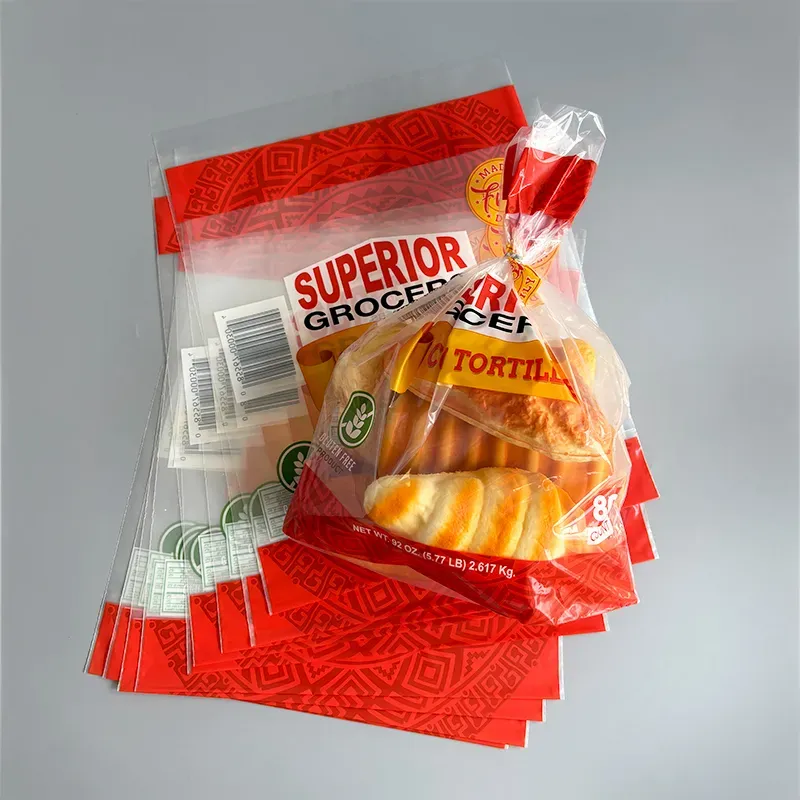
Polyethylene (PE) is one of the most common materials used for flexible food packaging. LDPE, or low-density polyethylene, is frequently selected for bread bags because of its flexibility and toughness.
Key Features:
Soft and flexible
Good resistance to moisture
Good toughness and resistance to tearing under normal use
Available in transparent, translucent, and colored options
Suitable for custom printing, depending on the film and printing process
Applications:
PE bread bags are widely used for sliced bread, sandwich bread, dinner rolls, bakery products, and everyday bread packaging. They are also suitable for packaging operations that require bags with good flexibility.
Advantages:
PE bread bags are practical for high-volume orders because the material is widely available and can be converted into different bag sizes and thicknesses. Buyers can customize the width, length, thickness, printing, and opening style according to their packaging needs.
2. OPP and BOPP Bread Bags
Oriented polypropylene (OPP) and biaxially oriented polypropylene (BOPP) films are known for their clarity, gloss, and stiffness. These materials are commonly used when product visibility and retail presentation are important.
Key Features:
High transparency
Glossy appearance
Good stiffness for attractive product presentation
Suitable for printed packaging
Generally less flexible than PE films of comparable thickness
Applications:
OPP and BOPP bread bags are suitable for cookies, pastries, croissants, sweet rolls, and selected bakery products sold in retail stores.
Advantages:
Clear, glossy packaging allows customers to see the baked goods inside. Printed BOPP bags can also help brands display product names, logos, ingredients, and other relevant information.
However, standard OPP/BOPP films may be more prone to cracking or splitting under certain folding and handling conditions than PE films. Their heat-sealing suitability depends on the specific film grade or whether a sealable coating or layer is used.
3. CPP Bread Bags
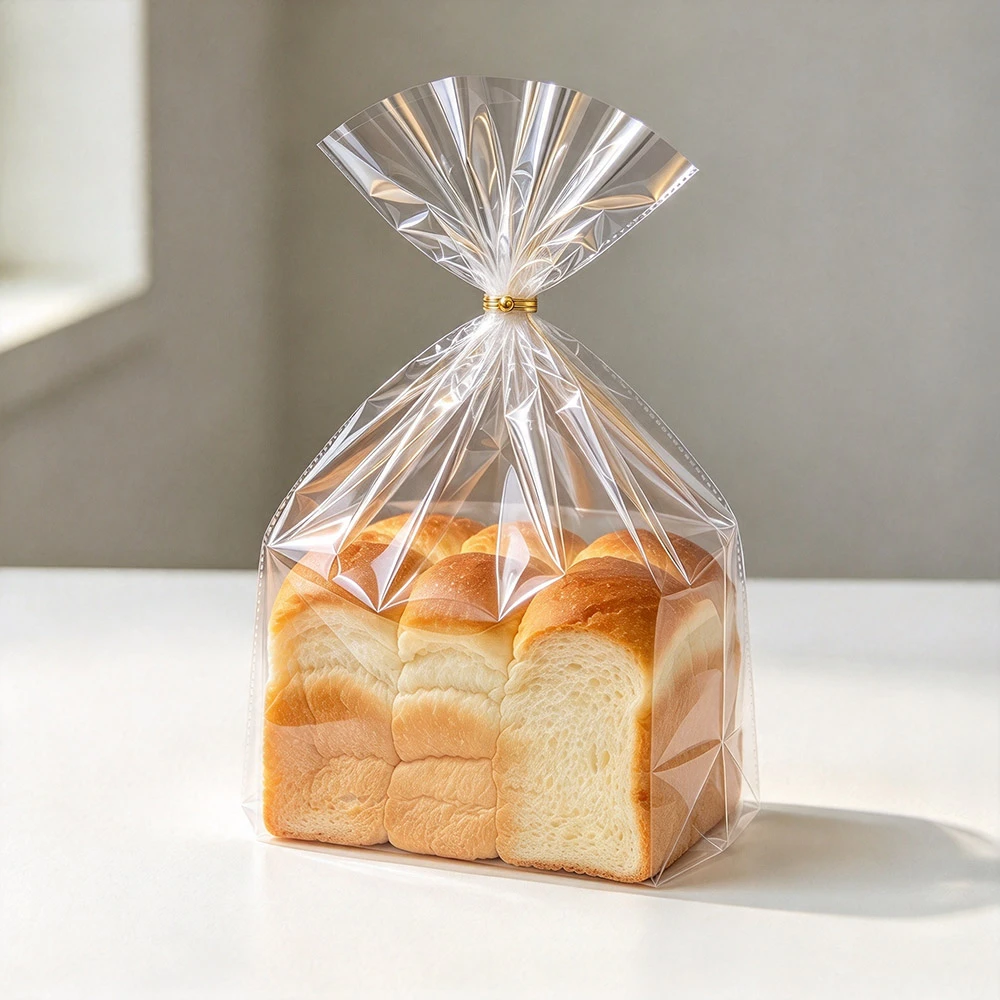
Cast polypropylene (CPP) is produced through a cast-film extrusion process. It generally offers good clarity, flexibility, and heat-sealing performance when the appropriate grade is selected.
Key Features:
Clear appearance
Good flexibility
Potentially good heat-sealing performance
Available in different film grades
Can be used as a packaging film or a layer in laminated structures
Applications:
CPP films can be used for bakery packaging, confectionery packaging, and other food packaging applications that require suitable sealing performance.
Advantages:
CPP can be a useful option for packaging operations that require clear film and reliable sealing. It may also serve as an inner sealing layer in laminated packaging structures.
Buyers should confirm the film grade, sealing temperature range, thickness, and compatibility with their packaging equipment before placing bulk orders.
4. Paper-Plastic Composite Bread Bags
Paper-plastic composite bread bags combine paper with a plastic film, lining, or transparent window. They offer a different appearance from conventional all-plastic bags.
Key Features:
Natural paper-based appearance
Optional transparent window
Space for branding and product information
Available in different paper weights and bag structures
Applications:
These bags are often used by artisan bakeries, specialty bread shops, premium food brands, and retailers seeking a paper-style packaging appearance.
Advantages:
Paper-plastic composite bread bags can combine visual appeal with the product visibility provided by a window. They also offer opportunities for customized printing and distinctive brand presentation.
However, paper and plastic combinations can be more difficult to recycle than packaging made from a single material. Recyclability depends on the structure, local collection systems, and applicable recycling requirements.
5. Compostable PLA/PBAT Bread Bags
PLA and PBAT are polymers used in certain compostable flexible packaging formulations. Their properties vary according to the formulation, thickness, and manufacturing process.
Key Features:
Can be formulated for compostable packaging applications
Available in different levels of transparency and flexibility
Suitable for selected bakery packaging applications
Requires verification of relevant compostability certifications
Applications:
Compostable bread bags may be considered by bakeries, food brands, and distributors seeking packaging that meets specific compostability requirements.
Advantages:
These materials can support packaging projects with defined environmental goals. However, buyers should verify the certification, applicable composting conditions, shelf-life performance, and intended disposal route.
Compostable does not automatically mean biodegradable under every environmental condition, nor does it mean that a bag can be composted at home. Product claims should be supported by appropriate evidence and certifications.
Comparison of Different Bread Bag Materials
| Material | Main Characteristics | Common Applications | Key Considerations |
|---|---|---|---|
| PE / LDPE | Flexible, tough, moisture-resistant | Sliced bread, sandwich bread, rolls | Practical for everyday packaging |
| OPP / BOPP | Clear, glossy, relatively stiff | Pastries, cookies, retail bakery products | Confirm flexibility and sealing requirements |
| CPP | Clear, flexible, often heat-sealable | Bakery packaging and laminated films | Select the correct film grade |
| Paper-plastic composite | Paper appearance, optional window | Artisan bread, premium bakery products | Check recycling compatibility |
| PLA/PBAT blends | Properties depend on formulation; may be compostable | Selected environmentally focused packaging projects | Verify certifications and disposal conditions |
No single material is best for every application. The right choice depends on the bakery product, packaging method, required shelf life, appearance, and budget.
How to Choose the Right Bread Bag Material
1. Consider the Type of Bread
Different baked goods have different packaging needs.
Sliced bread and sandwich loaves often require flexible bags that can accommodate the product without splitting. Croissants, cookies, and other visually appealing products may benefit from highly transparent packaging.
For crusty bread, packaging requirements may differ because excessive moisture retention can affect crust texture. Buyers should evaluate the desired texture and storage conditions before selecting the material.
2. Evaluate Transparency and Appearance
Product visibility is important for retail sales. Clear PE bags provide practical everyday packaging, while OPP/BOPP films can offer a glossy, display-oriented appearance.
Paper bags with transparent windows provide a combination of natural styling and product visibility. Custom printing can further improve brand recognition.
3. Check Moisture Protection Requirements
Bread bags can help limit moisture exchange, but actual performance varies by film type, thickness, bag design, and sealing method.
Buyers should consider whether the packaging is intended for fresh bread, packaged sliced bread, or dry bakery products. Where shelf life is critical, suppliers may need to provide water vapor transmission data or conduct packaging tests.
4. Match the Packaging Equipment
For automatic packing lines, material compatibility is especially important. The film must perform consistently during feeding, forming, cutting, and sealing.
Before ordering, confirm the machine type, operating speed, sealing temperature, film thickness, and required roll or bag dimensions.
A material that works well for manual bagging may not perform equally well on every automated packaging machine.
5. Compare Total Purchasing Costs
The cost of bread bags depends on material type, film thickness, dimensions, printing colors, order quantity, packaging configuration, and shipping costs.
PE may be an economical option for many everyday applications, while specialty films, paper-plastic structures, and certified compostable materials may involve different cost considerations.
Rather than comparing price per bag alone, bulk buyers should also consider material consumption, packaging efficiency, defect rates, and freight costs.
6. Verify Food Contact Compliance
Bread bags intended for direct food contact must meet the applicable requirements of the destination market.
Depending on the material and sales region, buyers may need food-contact declarations, migration test reports, supplier documentation, or other compliance evidence.
Requirements vary by jurisdiction and product. Buyers should confirm that the specific material and finished bag are suitable for the intended food-contact conditions.
Custom Bread Bags for Wholesale Buyers
Custom bread bags allow bakeries, distributors, and food manufacturers to align packaging with their product specifications and brand identity.
When requesting a quotation from a bread bag manufacturer, buyers should provide the following information:
Material: PE, LDPE, OPP, BOPP, CPP, paper-plastic composite, or a specified compostable structure
Dimensions: Bag width, length, gusset, and other required measurements
Thickness: Specified in microns or mils
Bag style: Flat bag, gusseted bag, self-adhesive bag, or another required format
Printing: Plain, single-color, or multicolor printing
Sealing requirements: Open-top, heat-sealable, or machine-compatible design
Order quantity: Estimated volume and preferred packaging format
Destination market: Country or region where the bags will be sold
A qualified supplier can evaluate the requirements and recommend a suitable material structure. Sample testing is recommended before approving a large production order, particularly for automated packing lines.
Why Work with a Bread Bag Manufacturer?
Working directly with a manufacturer can help buyers communicate specifications clearly and coordinate customized packaging orders.
A suitable supplier should be able to explain the differences between film grades, provide relevant technical information, confirm production tolerances, and support quality inspection.
For bulk orders, buyers should also review production capacity, lead time, packaging specifications, food-contact documentation, and shipping arrangements.
Requesting samples and confirming the final specifications before mass production can reduce misunderstandings and improve order consistency.
Frequently Asked Questions
Which material is best for bread bags?
PE is a practical choice for many everyday bread bags because it offers flexibility and toughness. OPP/BOPP may be preferred for high-clarity retail packaging, while CPP can be useful where suitable heat-sealing performance is required. The best material depends on the application.
Are PE bread bags better than OPP bread bags?
Neither material is universally better. PE is generally more flexible and resistant to splitting during ordinary handling, while OPP often provides greater stiffness and a glossy appearance. Buyers should select the material according to the product and packaging method.
Can bread bags be heat-sealed?
Yes, if the material and bag construction are suitable for heat sealing. PE and appropriate CPP grades are commonly used in heat-sealable structures. Standard OPP/BOPP films may require a sealable grade, coating, or additional sealing layer.
Are compostable bread bags suitable for all bakeries?
Not necessarily. Buyers should verify the bag's certification, shelf-life performance, storage requirements, and available composting infrastructure. Compostability claims should match the actual product and its disposal conditions.
What information is needed for a bulk bread bag quotation?
Provide the material, dimensions, thickness, bag style, printing requirements, order quantity, destination market, and packaging method. Samples and machine specifications can help the supplier recommend a more suitable solution.
Conclusion
Choosing the right bread bag material involves balancing flexibility, transparency, moisture protection, sealing performance, cost, and environmental requirements.
PE is a practical option for many everyday bread products. OPP/BOPP offers an attractive glossy appearance, while CPP can provide useful sealing properties in suitable grades. Paper-plastic composite bags support distinctive retail presentation, and certified compostable materials may suit projects with specific disposal requirements.
For wholesale buyers, the most reliable approach is to define the packaging requirements first, compare suitable materials, test samples, and confirm specifications before mass production. This helps ensure that the selected bread bags meet both product protection needs and commercial objectives.
