


Product Overview
Biodegradable stand up pouches are flexible packaging bags designed to provide convenient product storage while offering a more environmentally conscious packaging option. With a flat bottom structure, these pouches can stand upright on shelves, making them suitable for retail display, transportation, and everyday product packaging.
Depending on the product requirements, biodegradable stand up pouches can be manufactured using biodegradable, compostable, bio-based, or other specially formulated packaging materials. They can also be customized with different sizes, thicknesses, closures, printing designs, and barrier properties.
For food manufacturers, retailers, wholesalers, and brands looking to reduce their dependence on conventional plastic packaging, biodegradable stand up pouches can provide a flexible packaging solution that combines functionality, product presentation, and sustainability considerations.
Key Takeaways
Biodegradable stand up pouches combine flexible packaging with an upright display design.
They can be used for food, snacks, pet food, agricultural products, household products, and other goods.
Material structures can be customized according to barrier, strength, sealing, and product requirements.
Zipper closures, tear notches, valves, windows, and custom printing can be added.
Some biodegradable packaging materials are bio-based, while others are designed to biodegrade under specific environmental conditions.
Buyers should check material specifications and disposal conditions before selecting a biodegradable packaging solution.
Custom sizes, thicknesses, printing, and packaging structures are available for different applications.
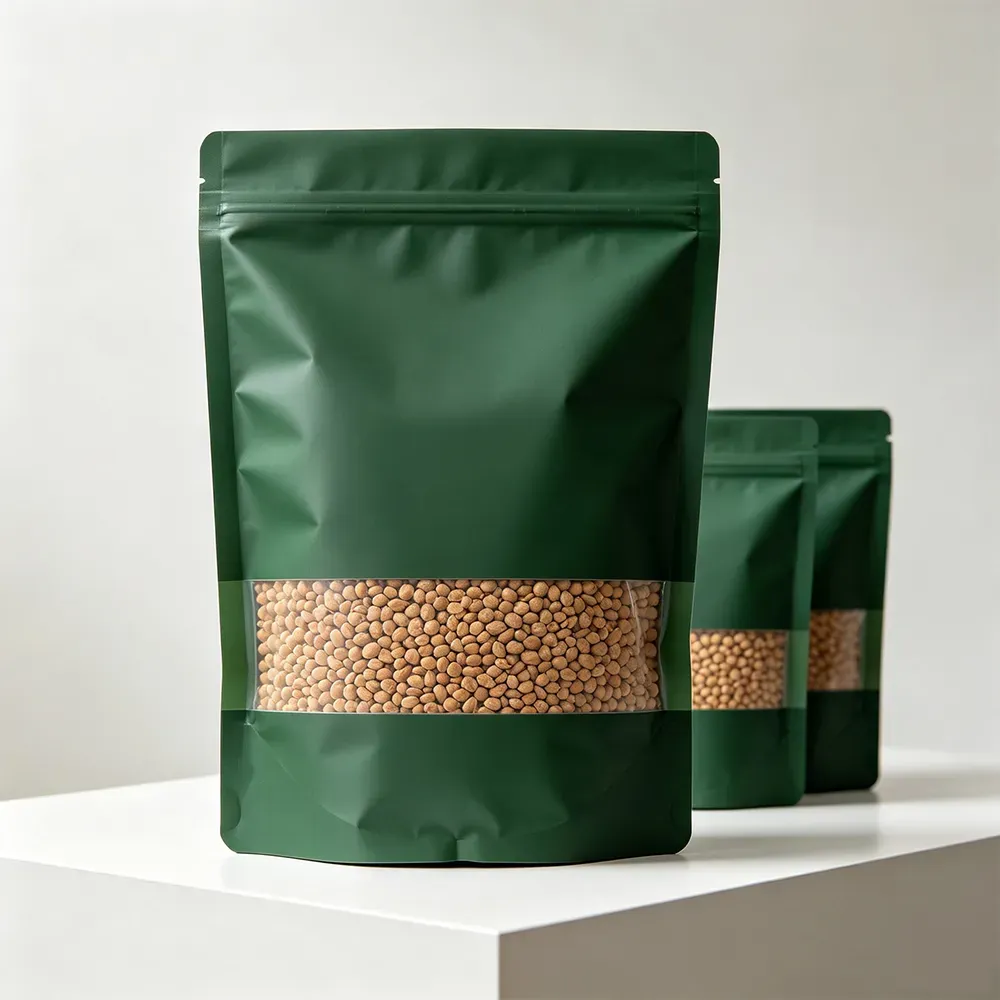
Biodegradable Stand Up Pouches: Context and History
Flexible packaging has developed significantly as manufacturers have looked for packaging solutions that are lightweight, convenient, and suitable for different products. Traditional stand up pouches became popular because their flexible structure uses less material than many rigid containers while still providing excellent product presentation.
As sustainability became increasingly important to consumers, retailers, and brands, packaging manufacturers began developing alternative materials and structures. This development led to the wider use of biodegradable, compostable, and bio-based films in flexible packaging.
Today, biodegradable stand up pouches are being considered by businesses that want to combine the practical advantages of flexible packaging with specific environmental packaging objectives.
The term "biodegradable" should not automatically be interpreted as meaning that a pouch will decompose quickly in every environment. The actual degradation process depends on the material composition, environmental conditions, temperature, humidity, microorganisms, and applicable standards.
What Are Biodegradable Stand Up Pouches?
Biodegradable stand up pouches are flexible bags manufactured with materials designed to biodegrade under defined conditions. Their stand-up construction allows the pouch to remain upright when filled, improving storage and product visibility.
A typical pouch may consist of several functional layers. Depending on the packaging requirements, these layers can provide mechanical strength, heat-sealing performance, moisture resistance, oxygen protection, light protection, and printability.
The pouch can be manufactured in different formats, including:
Stand up pouches with zipper
Stand up pouches without zipper
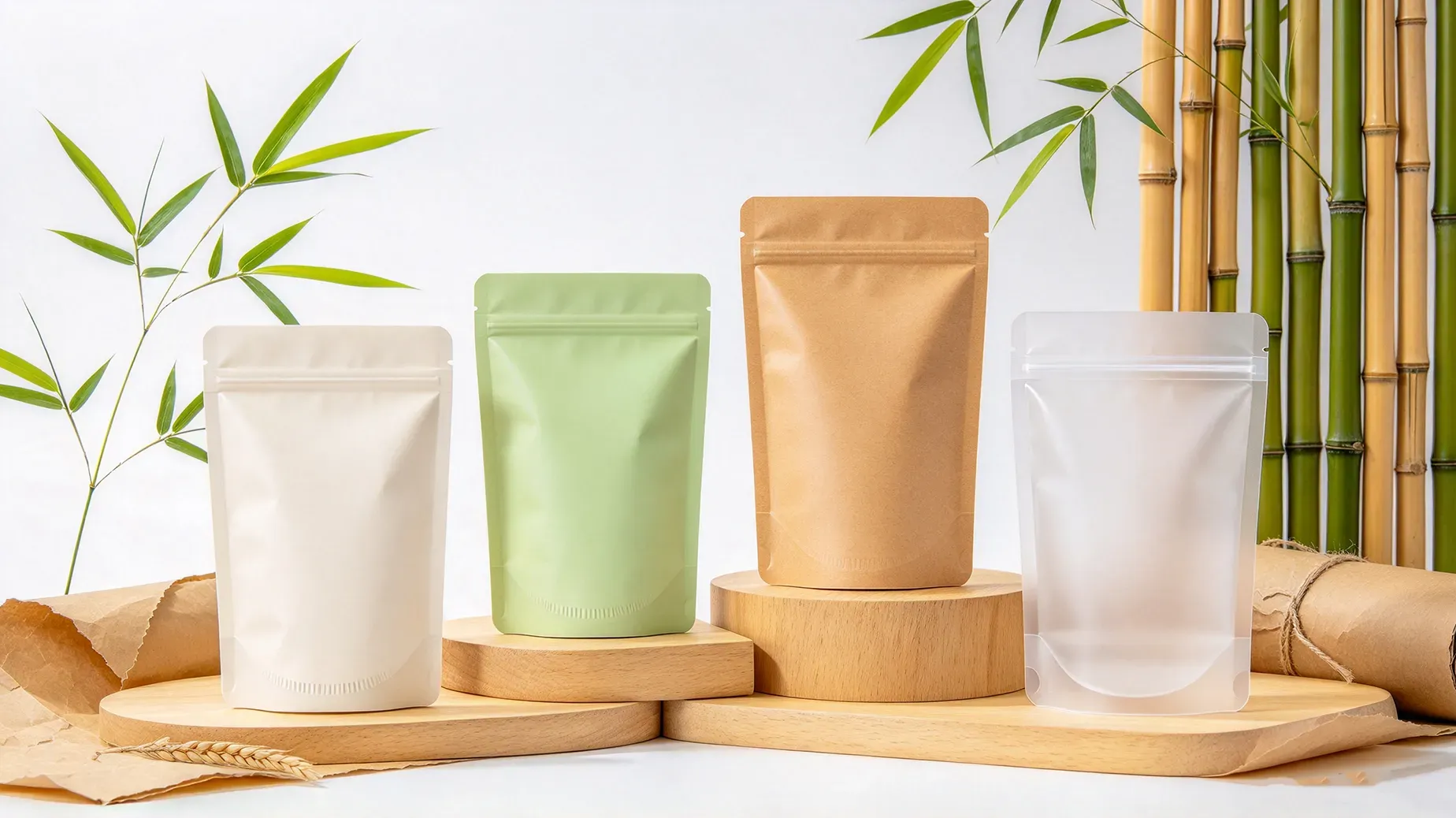
Kraft paper biodegradable pouches
Transparent or semi-transparent pouches
Custom printed stand up pouches
Window stand up pouches
Spouted stand up pouches
High-barrier stand up pouches
The appropriate structure depends on the product, shelf-life requirements, filling method, transportation conditions, and disposal requirements.
The Importance of Biodegradable Stand Up Pouches in Food Packaging
Food packaging needs to protect products from moisture, oxygen, contamination, light, and physical damage. At the same time, many food brands are looking for packaging options that support their sustainability goals.
Biodegradable stand up pouches can be considered for products such as snacks, dried fruits, coffee, tea, grains, nuts, pet treats, confectionery, and other dry foods when the selected material structure meets the required food-contact and performance requirements.
The stand-up format also provides practical advantages for food retailers. The pouch can occupy relatively little storage space, stand upright on shelves, and provide a large printable surface for branding and product information.
For food packaging, however, biodegradability should not be the only purchasing consideration. Food-contact compliance, sealing performance, barrier properties, mechanical strength, shelf life, and applicable disposal conditions should also be evaluated.
Biodegradable vs. Compostable Stand Up Pouches
Biodegradable and compostable are related but different terms.
A biodegradable material is designed to break down through biological processes under appropriate conditions. The time and conditions required can vary considerably depending on the material.
Compostable packaging is designed to break down under specified composting conditions and is generally assessed against relevant compostability requirements or standards.
Therefore, a biodegradable stand up pouch should not automatically be described as compostable unless its material and certification support that claim.
When purchasing sustainable packaging, buyers should ask the supplier for detailed information about:
Material composition
Biodegradation conditions
Compostability status
Applicable certifications
Food-contact compliance
Disposal requirements
Testing documentation
This information helps businesses make accurate environmental claims and communicate disposal instructions to customers.
Using Biodegradable Stand Up Pouches for Storage and Packaging
Biodegradable stand up pouches can be used for products that require lightweight and flexible packaging. The pouch structure can be selected according to the physical and chemical characteristics of the packaged product.
For dry products, the pouch can provide protection against moisture and external contamination. For products that require stronger barrier protection, a specially engineered multilayer structure may be considered.
The stand-up format is particularly useful when products need to be displayed vertically. A zipper can also allow consumers to open and reseal the package multiple times.
Before production, manufacturers and buyers should determine the required pouch dimensions, material structure, thickness, closure type, printing requirements, filling method, and expected shelf life.
Composition: Biodegradable and Bio-Based Materials
Biodegradable stand up pouches can use different material technologies depending on the intended application.
Bio-based materials are produced partly or entirely from renewable biological resources. However, being bio-based does not necessarily mean that a material is biodegradable.
Some biodegradable packaging structures may use materials derived from renewable resources, while others may rely on specially engineered polymers that are designed to biodegrade under specified conditions.
Common considerations include:
Renewable raw material content
Biodegradation performance
Mechanical strength
Heat-sealing performance
Moisture resistance
Oxygen barrier
Printability
Food-contact requirements
End-of-life conditions
The final pouch structure should be selected based on actual product requirements rather than using the word "biodegradable" as the only purchasing criterion.
Common Materials Used in Biodegradable Stand Up Pouches
Different materials may be considered for biodegradable stand up pouches depending on the required performance.
PLA
PLA is a bio-based polymer commonly associated with renewable resources. It can provide useful clarity and printability, although its performance depends on the specific formulation and packaging structure.
PBAT
PBAT is a biodegradable polymer frequently used in biodegradable packaging formulations. It can provide flexibility and is often combined with other materials.
Starch-Based Materials
Starch-based materials can be incorporated into certain biodegradable packaging structures. Their properties depend on the formulation and intended application.
Paper-Based Structures
Paper can be incorporated into flexible packaging structures to create a natural appearance. Depending on the barrier layer and overall construction, paper-based pouches can be designed for different dry-product applications.
Other Biodegradable or Compostable Materials
Packaging manufacturers may also develop customized structures using other biodegradable or compostable materials according to product performance, certification, and end-of-life requirements.
Characteristics of Biodegradable Stand Up Pouches
Biodegradable stand up pouches can provide several practical characteristics for modern packaging applications.
Stand-Up Design
The bottom gusset allows the pouch to remain upright when filled, making it convenient for retail shelves and storage.
Flexible Structure
The flexible construction reduces the need for rigid packaging while allowing the pouch to adapt to the packaged product.
Customizable Barrier Performance
Different material combinations can be selected to provide appropriate protection against moisture, oxygen, light, or external contamination.
Resealable Options
Zipper closures can make the package easier for consumers to open and reseal after use.
Custom Printing
Large printable surfaces provide space for logos, product information, instructions, barcodes, and other branding elements.
Lightweight Construction
Flexible pouches can offer a lightweight packaging format, which can be useful for transportation and storage.
Advantages of Biodegradable Stand Up Pouches
One important advantage of biodegradable stand up pouches is their combination of flexible packaging functionality and sustainability-oriented material options.
They can also provide:
Attractive retail presentation
Convenient upright storage
Flexible size and shape options
Custom printing opportunities
Optional resealable closures
Lightweight packaging
Efficient use of storage space
Different material and barrier configurations
Custom packaging solutions for different products
For brands, the pouch can also provide a large surface for communicating product information and sustainability-related packaging details, provided that environmental claims are supported by appropriate documentation.
Application Scenarios for Biodegradable Stand Up Pouches
Biodegradable stand up pouches can be used in a variety of industries.
Food Packaging
Suitable applications may include snacks, nuts, dried fruits, coffee, tea, grains, cereals, confectionery, and other dry food products when the selected structure meets food-contact requirements.
Pet Food Packaging
The pouches can be used for pet treats, dry pet food, and other pet-related products. Strong seals and appropriate barrier properties are important for maintaining product quality.
Agricultural Products
Seeds, dried agricultural products, and other dry goods can be packaged in customized stand-up pouches.
Household Products
Certain powdered or dry household products can be packaged in flexible pouches when the material is compatible with the product.
Personal Care Products
Some dry personal care products and accessories can use customized stand up pouch formats.
Retail Products
Because the pouch can stand upright and provide a large printable area, it can be suitable for brands that require attractive shelf presentation.
How to Use Biodegradable Stand Up Pouches Effectively
Selecting the right pouch is only the first step. Proper filling, sealing, storage, and transportation can also affect packaging performance.
For food products, the product should be filled under appropriate hygienic conditions. The sealing area should remain clean and free from product particles to achieve a reliable seal.
For products sensitive to moisture or oxygen, buyers should select a pouch structure with suitable barrier performance.
If a zipper is included, consumers should close the zipper properly after opening. For products with a long intended shelf life, packaging tests should be conducted before large-scale production.
Businesses should also communicate appropriate storage and disposal instructions to customers when required.
Storage Method
Biodegradable stand up pouches should generally be stored in a clean, dry, and well-ventilated environment before use.
Avoid prolonged exposure to:
Direct sunlight
Excessive heat
High humidity
Water
Sharp objects
Chemical contamination
Pouches should remain in their original protective packaging until they are ready for production or filling.
Storage conditions can affect certain biodegradable materials, so manufacturers should follow the supplier's recommended storage requirements for the specific material structure.
How to Dispose of Biodegradable Stand Up Pouches
The disposal method depends on the exact material composition and applicable local waste-management system.
A biodegradable pouch does not necessarily decompose effectively in a landfill, open environment, or marine environment. Some materials require industrial composting facilities or other controlled conditions.
Before disposal, users should check the packaging label, supplier documentation, and applicable local requirements.
For businesses, accurate disposal instructions can help reduce consumer confusion and prevent biodegradable packaging from being incorrectly placed into recycling streams.
Choosing Biodegradable Stand Up Pouches
When purchasing biodegradable stand up pouches, buyers should consider more than appearance and price.
1. Product Type
Determine whether the pouch will package food, pet products, agricultural goods, household products, or other products.
2. Material Structure
Select a material structure according to the required strength, flexibility, barrier performance, and end-of-life requirements.
3. Size and Capacity
The pouch dimensions should match the product weight, volume, filling equipment, and shelf presentation requirements.
4. Closure
Choose between an open-top pouch, zipper pouch, spout pouch, or another closure according to the product and consumer usage.
5. Printing
Custom printing can include brand logos, product information, instructions, barcodes, and other required content.
6. Barrier Requirements
Products sensitive to moisture, oxygen, aroma, or light may require specialized barrier structures.
7. Certification and Documentation
For commercial packaging, buyers should request relevant material specifications, test reports, food-contact documentation, and certification information where applicable.
8. MOQ and Production Capability
For custom orders, minimum order quantity, production lead time, printing method, sample availability, and manufacturing capacity should be confirmed before placing an order.
Conclusion
Biodegradable stand up pouches provide a flexible packaging format for businesses looking for alternatives to conventional packaging materials. Their upright design, customizable structure, printing options, and resealable formats make them suitable for many retail and B2B packaging applications.
However, selecting biodegradable packaging requires a clear understanding of material composition, product compatibility, barrier performance, food-contact requirements, certification, and end-of-life conditions.
For brands and importers, the right biodegradable stand up pouch should balance packaging performance, product protection, appearance, manufacturing requirements, and the specific sustainability objectives of the product.
FAQ
Are biodegradable stand up pouches suitable for food packaging?
Yes, biodegradable stand up pouches can be used for certain food products when the selected material structure is suitable for the application and meets applicable food-contact requirements.
Are biodegradable stand up pouches compostable?
Not necessarily. Biodegradable and compostable describe different properties. Buyers should verify the material specifications and relevant certification before making a compostability claim.
Can biodegradable stand up pouches be custom printed?
Yes. Custom printing can be used to display logos, product information, graphics, barcodes, and other branding elements.
Can biodegradable stand up pouches have zippers?
Yes. Zipper closures can be incorporated into many stand-up pouch designs to provide convenient opening and resealing.
What products can be packaged in biodegradable stand up pouches?
Potential applications include snacks, dried fruits, nuts, coffee, tea, grains, pet treats, agricultural products, and various dry consumer goods, depending on the selected material structure.
Are biodegradable stand up pouches waterproof?
The level of moisture resistance depends on the material structure and pouch design. Buyers should specify the required moisture barrier when requesting a quotation.
How should biodegradable stand up pouches be stored?
They should generally be stored in a clean, dry environment away from direct sunlight, excessive heat, moisture, and contamination. Specific storage requirements depend on the material.
How do I dispose of biodegradable stand up pouches?
Disposal depends on the exact material and local waste-management facilities. Check the product documentation and disposal instructions rather than assuming that all biodegradable pouches can be composted at home.
Can biodegradable stand up pouches be made in different sizes?
Yes. Custom dimensions can be produced according to product capacity, filling requirements, shelf presentation, and transportation needs.
What should I ask a supplier before purchasing biodegradable stand up pouches?
Important questions include material composition, thickness, dimensions, barrier performance, food-contact suitability, certifications, printing options, MOQ, lead time, sample availability, and recommended disposal conditions.
