


Clear packaging bags for clothes are widely used in the garment, fashion, retail, and e-commerce industries. They provide a simple and effective way to package, protect, store, and display clothing products while allowing customers to see the contents without opening the packaging.
Made from transparent plastic materials such as PE, LDPE, PP, and OPP, these bags are available in different sizes, thicknesses, and designs. Depending on packaging requirements, businesses can choose flat bags, self-adhesive bags, ziplock bags, gusseted bags, or custom-printed garment packaging bags.
For clothing manufacturers, wholesalers, and retailers, clear packaging bags for clothes offer a practical solution for keeping garments clean, organized, and presentable throughout storage, transportation, and distribution.
Key Takeaways
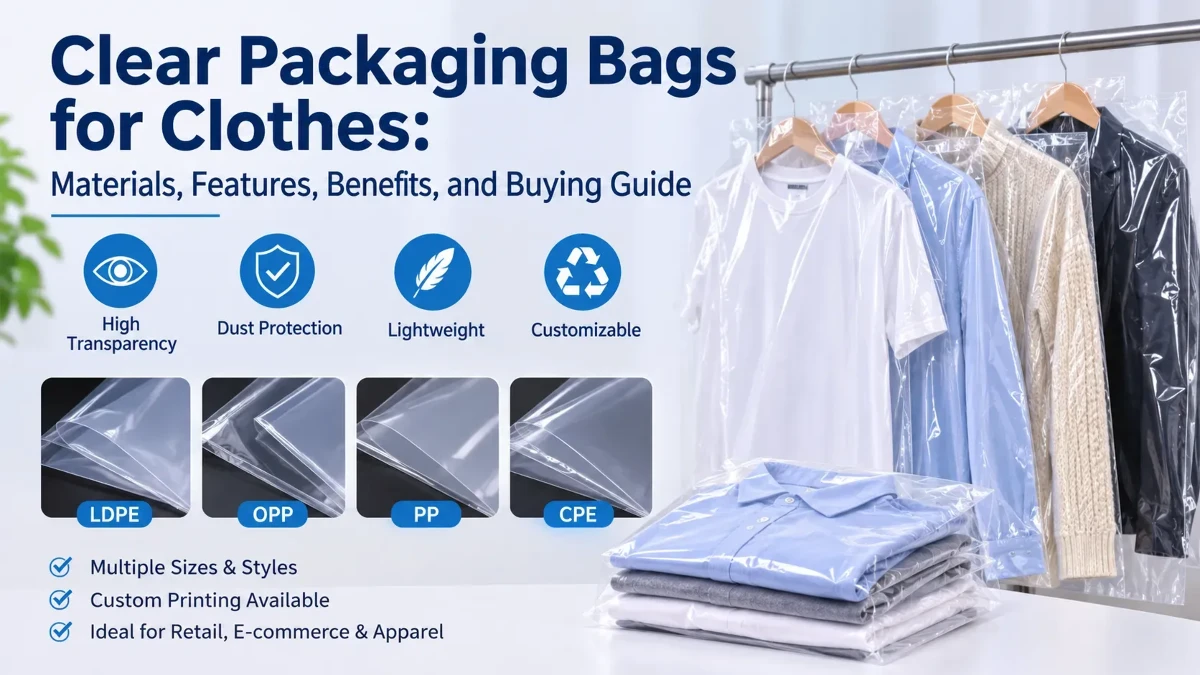
High Transparency: Allows customers and warehouse staff to identify clothing products easily.
Dust Protection: Helps prevent dust, dirt, and moisture from directly contacting garments.
Flexible Materials: Available in PE, LDPE, PP, OPP, and other suitable plastic materials.
Multiple Designs: Includes flat bags, flap bags, zipper bags, and hanging garment bags.
Custom Sizes: Suitable for T-shirts, shirts, dresses, trousers, underwear, and other apparel.
Branding Options: Supports custom printing, logos, labels, and packaging designs.
Cost-Effective: Lightweight construction helps reduce packaging and transportation costs.
Clear Packaging Bags for Clothes: Context and History
Clothing packaging has evolved significantly with the development of the textile, retail, and e-commerce industries. In the past, garments were commonly stored and transported using paper wrapping, fabric covers, or simple packaging materials.
As clothing production expanded and international trade increased, manufacturers needed packaging that was lightweight, transparent, moisture-resistant, and economical. Plastic packaging gradually became a popular choice because it could protect garments while making product identification easier.
Today, clear packaging bags for clothes are widely used in garment factories, clothing warehouses, supermarkets, department stores, and online retail businesses. Improvements in plastic manufacturing have also introduced more flexible materials, better sealing technologies, recyclable options, and customized printing solutions.
Modern garment packaging focuses not only on product protection but also on presentation, logistics efficiency, and environmental considerations.
What Are Clear Packaging Bags for Clothes?
Clear packaging bags for clothes are transparent plastic bags designed specifically for packaging and protecting garments. They allow clothing items to remain visible while providing a physical barrier against dust, dirt, and handling during storage and transportation.
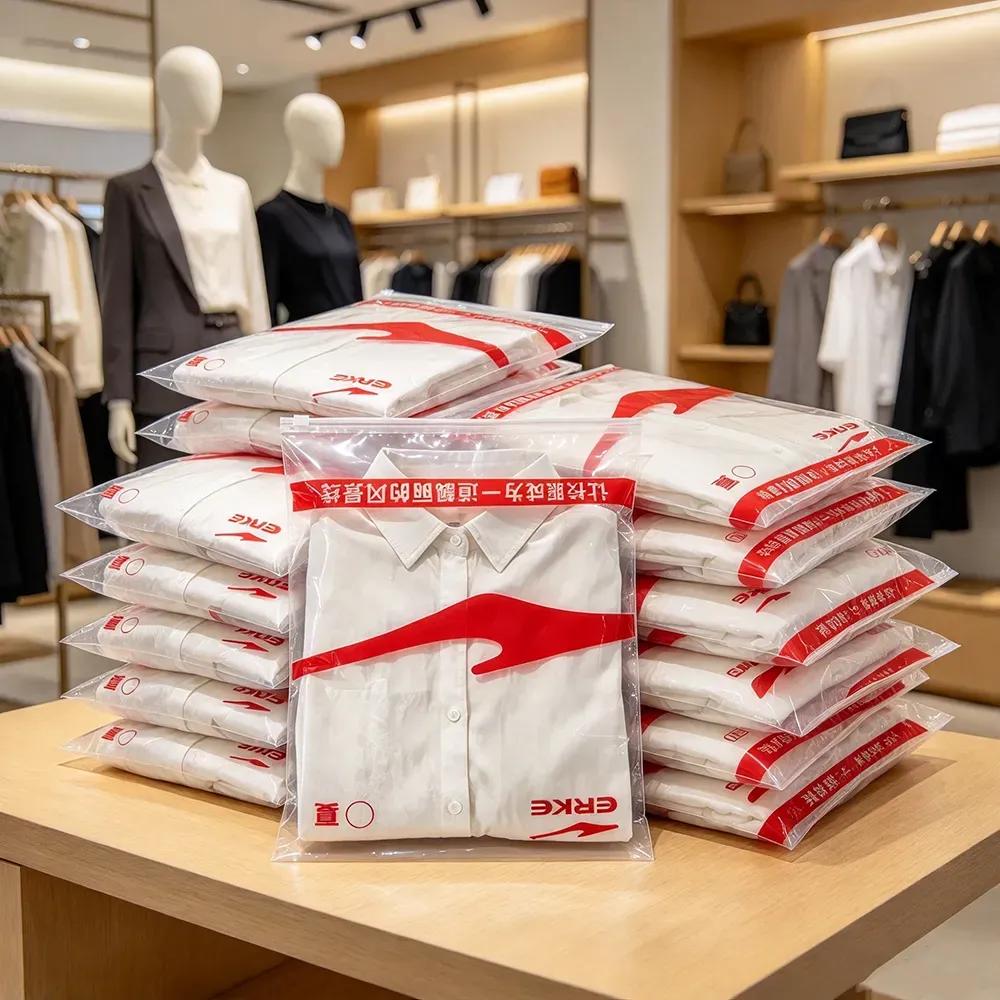
These bags are manufactured in different shapes and styles to accommodate various garment types. For example, flat bags are suitable for folded T-shirts, while self-adhesive flap bags are commonly used for shirts and online clothing orders. Ziplock bags provide reusable packaging, making them suitable for clothing storage and retail applications.
Depending on the intended use, manufacturers can customize the following specifications:
Bag width, length, and thickness.
Transparent, frosted, or semi-transparent finishes.
Flat, gusseted, zipper, and adhesive-flap structures.
Ventilation holes or warning printing where required.
Custom logos, product information, and barcodes.
These packaging solutions help clothing businesses maintain consistent product presentation and improve packaging efficiency.
The Importance of Clear Packaging Bags for Clothes in the Garment Industry
Packaging plays an important role in protecting clothing products from manufacturing to final delivery. During production, garments may pass through multiple processes, including folding, inspection, warehousing, and transportation.
Clear packaging bags for clothes help reduce direct exposure to dust, dirt, and handling contaminants during these stages. Their transparent design also allows warehouse employees to identify products quickly without opening individual packages.
For retailers, transparent garment packaging improves product organization and makes size, color, and style identification more convenient. For e-commerce sellers, individual packaging helps keep garments organized during order preparation and shipping.
Furthermore, customized packaging can display brand logos, product details, and care information, helping businesses create a more professional packaging experience.
Clear Plastic vs. Frosted Packaging Bags for Clothes
Different clothing businesses have different packaging requirements. Two common choices are fully transparent plastic bags and frosted packaging bags.
|
Comparison |
Clear Plastic Bags |
Frosted Packaging Bags |
|---|---|---|
|
Transparency |
High transparency |
Semi-transparent |
|
Product Visibility |
Contents are clearly visible |
Contents are partially visible |
|
Appearance |
Simple and practical |
More subtle and premium |
|
Material Options |
PE, LDPE, PP, OPP |
PE, LDPE, PP |
|
Branding |
Supports custom printing |
Supports custom printing |
|
Common Uses |
Retail and e-commerce packaging |
Boutique and branded clothing |
|
Cost |
Generally economical |
Depends on material and finish |
Clear bags are ideal when product visibility and easy identification are priorities. Frosted bags are more suitable for brands looking for a softer appearance or partial privacy.
The best option depends on the clothing type, brand positioning, packaging budget, and customer expectations.
Using Clear Packaging Bags for Clothes for Storage and Packaging
Clear packaging bags are suitable for both short-term garment packaging and long-term organization when the correct material and storage conditions are selected.
In garment factories, workers typically fold and inspect clothing before placing each item into an appropriately sized bag. The packaging can then be sealed using an adhesive flap, heat sealing, or a zipper closure.
For retail stores, individual garment packaging helps maintain product cleanliness and makes inventory management easier. E-commerce businesses can also use these bags as inner packaging before placing garments into mailing bags or shipping cartons.
When selecting packaging, businesses should ensure that the bag size provides sufficient space for the garment without excessive stretching or compression.
Composition: Clear and Flexible Plastic Materials
The composition of clear garment packaging depends on the required transparency, flexibility, strength, and packaging design.
Most clear packaging bags for clothes are made from thermoplastic materials that can be processed into thin, flexible films. Manufacturers select different resin grades and film structures according to the intended application.
For general garment packaging, polyethylene is a common choice because it offers flexibility, moisture resistance, and good sealing performance. For applications requiring a glossy appearance and excellent product visibility, polypropylene-based films may also be considered.
The material should be selected according to the garment type, packaging process, transportation conditions, and applicable environmental requirements.
Common Materials Used in Clear Packaging Bags for Clothes
Different materials provide different performance characteristics. The following are commonly used options:
|
Material |
Main Characteristics |
Common Applications |
|---|---|---|
|
LDPE |
Soft, flexible, transparent, and moisture-resistant |
Shirts, T-shirts, and general garment packaging |
|
HDPE |
Lightweight, relatively stiff, and strong |
Basic clothing bags and lightweight packaging |
|
LLDPE |
Good tensile strength, flexibility, and tear resistance |
Garment packaging requiring additional durability |
|
PP |
Good stiffness and transparency |
Retail clothing packaging |
|
OPP |
High clarity, glossy appearance, and good printability |
Premium clothing display bags |
|
CPE |
Soft texture, flexibility, and frosted appearance options |
Underwear, fashion accessories, and premium packaging |
LDPE is particularly suitable for flexible garment bags, while OPP is often selected when product presentation is a priority. The final choice should consider bag thickness, sealing requirements, and packaging equipment.
plasticspact.ca+1
Characteristics of Clear Packaging Bags for Clothes
High-quality garment packaging should provide practical protection while maintaining a clean and attractive appearance.
The main characteristics include:
1. High Transparency
Transparent materials allow clothing colors, patterns, and designs to remain visible without removing the packaging.
2. Dust and Moisture Protection
Plastic film creates a physical barrier that helps reduce exposure to dust, dirt, and external moisture.
3. Lightweight Construction
Lightweight packaging adds minimal weight to garments, making it suitable for bulk transportation and e-commerce orders.
4. Flexible and Durable
Different film thicknesses can be selected to provide suitable flexibility, tensile strength, and resistance to tearing.
5. Multiple Closure Options
Available closures include self-adhesive flaps, ziplock closures, heat sealing, and open-mouth designs.
6. Customizable Appearance
Businesses can choose clear, frosted, printed, or partially transparent packaging according to their branding requirements.
Advantages of Clear Packaging Bags for Clothes
Using transparent garment packaging offers several advantages for manufacturers, retailers, and distributors.
Improved Product Presentation: Customers can see the garment directly through the packaging.
Better Inventory Management: Product identification becomes easier in warehouses and retail environments.
Reduced Handling: Individual packaging helps keep folded garments organized and reduces unnecessary handling.
Convenient Transportation: Lightweight bags are easy to pack into cartons and shipping containers.
Flexible Customization: Different sizes, thicknesses, closures, and printing designs can be customized.
Cost Efficiency: Plastic film packaging is generally economical for high-volume garment production.
Brand Recognition: Custom logos and printed information help strengthen brand identity.
For large clothing manufacturers, standardized packaging sizes and designs can also improve packing efficiency and simplify inventory management.
Application Scenarios for Clear Packaging Bags for Clothes
Tripumer 200 Pcs Cellophane Bags Cookie Bags 12 x 16 inch Self Sealing Cello Bags Packaging Bags for Gift Giving Clear - Walmart.com
100PCS OPP Clear Plastic Excellent Quality Self-Adhesive With Air Hole Plastic Packing Bag | Shopee Philippines
Clothing Production Timeline After Sample Approval | Brandex Sourcing
11
Clear garment packaging is suitable for different clothing categories and business applications.
1. T-Shirts and Shirts
Individual transparent bags keep folded shirts organized and make different colors and sizes easy to identify.
2. Dresses and Fashion Clothing
Larger clear bags can package dresses, skirts, and other fashion garments while helping maintain their presentation.
3. Underwear and Socks
Small clear packaging bags are suitable for underwear, socks, leggings, and other lightweight clothing accessories.
4. E-Commerce Clothing Packaging
Online clothing retailers use individual bags to organize products before placing them into courier bags or shipping cartons.
5. Garment Factories and Wholesalers
Factories use clear bags for finished-product packaging, bulk orders, warehouse storage, and international shipments.
6. Retail Stores and Department Stores
Transparent packaging helps retailers organize products by size, style, and color while keeping garments protected.
How to Use Clear Packaging Bags for Clothes Effectively
Correct packaging procedures help maintain garment quality and improve packing efficiency.
Inspect the Garments: Check that clothing is clean, dry, and free from visible defects.
Fold Properly: Fold garments into a consistent size to improve packaging appearance.
Choose the Correct Bag: Select a suitable bag width, length, and thickness according to the garment dimensions.
Insert the Garment: Place the folded clothing inside carefully without excessive stretching.
Seal the Opening: Use an adhesive flap, zipper, or heat-sealing method as appropriate.
Add Product Information: Apply labels, barcodes, size stickers, or customized printing if required.
Pack for Transportation: Place the packaged garments into cartons or outer shipping bags.
When using self-adhesive packaging, ensure the adhesive strip does not directly contact the clothing.
Storage Method
Proper storage helps maintain the appearance and performance of unused garment packaging bags.
Store bags in a cool, dry, and clean environment.
Keep packaging away from direct sunlight and excessive heat.
Avoid contact with sharp objects that may damage the film.
Keep unused bags inside sealed outer packaging to reduce dust accumulation.
Avoid placing heavy objects on top of thin plastic bags.
Follow the manufacturer's recommended storage conditions.
Clothing should also be completely dry before packaging to help prevent moisture-related problems during storage and transportation.
How to Dispose of Clear Packaging Bags for Clothes
The disposal method depends on the actual plastic material and the recycling facilities available in the local market.
Clean, dry polyethylene bags may be accepted through designated plastic film recycling programs. However, acceptance varies by location and collection system.
Businesses can consider the following practices:
Separate PE bags from paper, cardboard, and other packaging materials.
Remove clothing labels, stickers, and other components when required by local recycling guidelines.
Keep used bags clean and dry before recycling.
Consider recyclable mono-material PE structures when designing new packaging.
Evaluate recycled-content materials where suitable for the application.
It is important to remember that not every transparent plastic bag is automatically recyclable. Material composition, printing, closures, contamination, and local collection facilities all affect recycling options.
Choosing Clear Packaging Bags for Clothes
Selecting the right garment packaging requires considering product dimensions, material performance, packaging methods, and purchasing costs.
Before placing a bulk order, buyers should evaluate the following factors:
1. Material Selection
Choose LDPE for flexible everyday garment packaging, OPP for glossy product presentation, or other suitable materials according to specific requirements.
2. Bag Size
Measure the folded garment before selecting bag dimensions. The bag should provide enough space for easy insertion and removal without excessive unused material.
3. Film Thickness
Choose suitable thickness according to garment weight, handling frequency, and transportation conditions. Thicker film may provide additional durability but also increases material consumption.
4. Bag Style
Common options include flat bags, self-adhesive flap bags, ziplock bags, gusseted bags, and hanging garment bags.
5. Printing and Branding
Consider custom logos, product descriptions, size information, barcodes, and warning messages to meet retail and distribution requirements.
6. Supplier Manufacturing Capabilities
Choose an experienced plastic packaging manufacturer that can provide consistent quality, flexible customization, stable production capacity, and reliable delivery.
7. Environmental Requirements
If recyclability or recycled content is important, ask the supplier about material composition, recycled-content documentation, and compatibility with the intended recycling system.
Common Sizes, Thicknesses, and Applications
The following table provides general reference specifications. Actual dimensions and thicknesses can be customized.
|
Clothing Type |
Suggested Bag Size (cm) |
Suggested Thickness (microns) |
|---|---|---|
|
Socks |
10 × 15 |
25–40 |
|
Underwear |
15 × 20 |
25–40 |
|
Children's T-Shirts |
20 × 28 |
25–40 |
|
Adult T-Shirts |
25 × 35 |
30–50 |
|
Shirts |
30 × 40 |
30–50 |
|
Sweaters |
35 × 45 |
40–60 |
|
Dresses |
40 × 55 |
40–70 |
|
Jackets |
45 × 60 |
50–80 |
These are indicative specifications rather than fixed industry standards. The actual requirements depend on garment dimensions, weight, bag design, and customer preferences.
Conclusion
Clear packaging bags for clothes are an essential packaging solution for garment manufacturers, wholesalers, retailers, and e-commerce businesses. Their transparency, flexibility, lightweight construction, and customizable designs make them suitable for packaging a wide range of clothing products.
From basic LDPE garment bags to glossy OPP packaging and reusable ziplock designs, businesses can select different materials and structures according to their product requirements.
Working with an experienced packaging manufacturer also allows buyers to customize bag dimensions, thickness, printing, and closure styles while maintaining consistent product quality.
Whether you need standard transparent garment bags or customized packaging for your clothing brand, choosing the right packaging solution can improve product presentation, storage efficiency, and customer experience.
FAQ
1. What Are Clear Packaging Bags for Clothes Made Of?
They are commonly manufactured from LDPE, HDPE, LLDPE, PP, OPP, and other suitable plastic films. LDPE is widely used because of its flexibility, transparency, and moisture resistance.
2. Are Clear Packaging Bags for Clothes Waterproof?
Plastic garment bags provide resistance to external moisture and help protect clothing from splashes and damp environments. However, their waterproof performance depends on the material, bag construction, and sealing method. They should not automatically be considered completely waterproof.
3. Can Clear Garment Bags Be Customized?
Yes. Manufacturers can customize bag sizes, thicknesses, materials, colors, printing, and closure styles according to customer requirements.
4. What Is the Difference Between LDPE and OPP Clothing Bags?
LDPE bags are generally softer and more flexible, making them suitable for everyday garment packaging. OPP bags offer a glossier appearance and high transparency, making them popular for retail product presentation.
5. Are Clear Packaging Bags for Clothes Recyclable?
Some PE-based garment bags can be recycled through suitable plastic film collection programs. However, recycling availability depends on local facilities, material composition, printing, labels, and closures.
6. Can These Bags Be Used for E-Commerce Clothing Packaging?
Yes. They are commonly used as inner packaging for online clothing orders. Individual bags help keep garments clean and organized before they are placed inside outer courier bags or shipping cartons.
7. What Thickness Is Best for Clear Clothing Bags?
The suitable thickness depends on the garment weight, bag dimensions, and intended application. Lightweight T-shirts may require thinner film, while jackets and heavier clothing may need thicker material.
8. Do You Offer Wholesale Clear Packaging Bags for Clothes?
Yes. Plastic packaging manufacturers can supply wholesale garment packaging bags in different materials, sizes, thicknesses, and designs. Buyers can request customized specifications and bulk quotations based on their purchasing requirements.
