


Refuse sacks with drawstring are practical waste disposal bags designed with an integrated drawstring closure that makes collecting, lifting, tying, and transporting rubbish easier. Compared with traditional flat-top refuse bags, these bags provide a more convenient way to secure waste while helping reduce spills and contact with rubbish.
Made from materials such as LDPE, HDPE, or recycled polyethylene, refuse sacks with drawstring are available in different sizes, thicknesses, colors, and capacities to meet various household, commercial, and industrial waste management requirements.
As a professional plastic packaging manufacturer, we offer customized refuse sacks with drawstring for wholesalers, distributors, cleaning companies, supermarkets, hotels, and other commercial buyers. Options include custom dimensions, material selection, thickness, colors, printing, and packaging.
Key Takeaways
Easy Closure: Integrated drawstrings allow users to close and secure bags quickly.
Convenient Handling: Easy-to-carry design simplifies rubbish collection and disposal.
Durable Materials: Available in LDPE, HDPE, and recycled PE options.
Leak and Tear Resistance: Designed to handle different types of everyday waste.
Multiple Applications: Suitable for homes, offices, hotels, restaurants, and industrial environments.
Customizable Sizes: Different capacities and thicknesses are available.
OEM & Wholesale Supply: Custom printing, colors, packaging, and bulk orders are supported.
Refuse Sacks with Drawstring: Context and History
Waste disposal has become an essential part of modern household and commercial management. As urban populations have increased and commercial activities have expanded, the demand for convenient and hygienic waste collection products has continued to grow.
Traditional refuse bags were initially designed with simple open tops that required users to tie knots manually. Although functional, this design could be inconvenient when bags were full or when users needed to transport heavy rubbish.
The introduction of drawstring closures improved the usability of refuse bags. By incorporating a flexible cord or plastic strip into the top edge, manufacturers created a more convenient closure system that allows users to gather the opening and secure the contents with minimal effort.
Today, refuse sacks with drawstring are widely used in residential, commercial, and institutional environments. Improvements in polyethylene materials, film extrusion, sealing technology, and recycled material processing have also expanded the available product options.
Modern manufacturers can now supply different bag constructions to meet specific requirements for strength, capacity, convenience, and cost efficiency.
What Are Refuse Sacks with Drawstring?
Refuse sacks with drawstring are plastic waste collection bags featuring an integrated closure mechanism at the opening. The drawstring is usually formed by incorporating a cord or flexible plastic strip into the top hem of the bag.
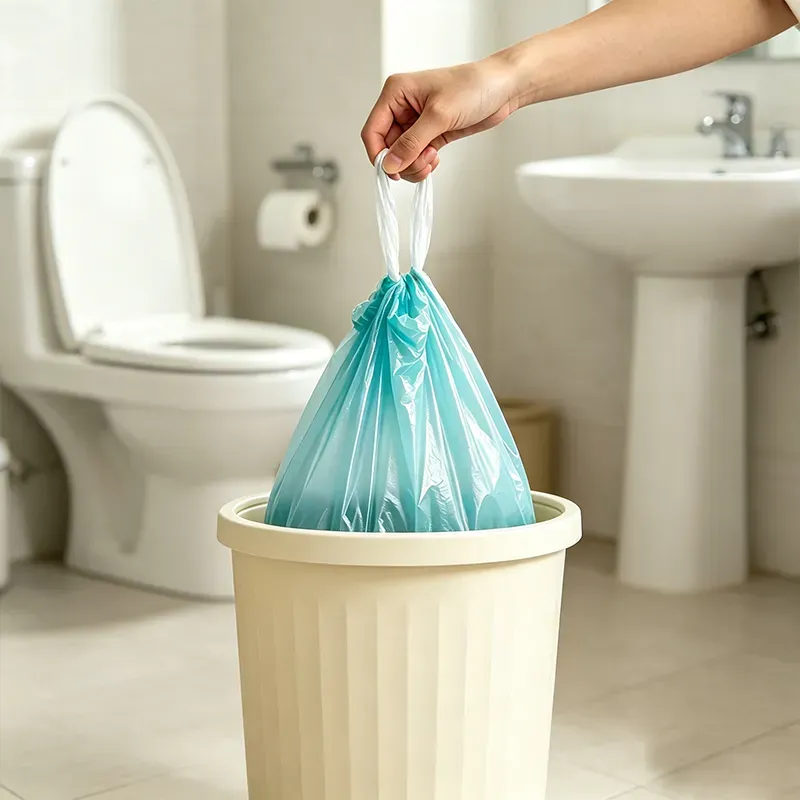
When the bag is full, users simply pull the drawstring to gather the opening. This creates a secure closure that helps keep rubbish contained during lifting, carrying, and transportation.
Unlike standard refuse bags that require manual knotting, this design provides a quicker and more convenient sealing method.
The bags are commonly manufactured using low-density polyethylene (LDPE) or high-density polyethylene (HDPE). LDPE provides flexibility and good puncture resistance, while HDPE offers a thinner, relatively stiff structure with good tensile strength.
Refuse sacks with drawstring can be produced in various capacities, including small household sizes and large commercial options. They are also available in different colors, thicknesses, and packaging formats.
For businesses purchasing in bulk, customized specifications can help ensure that the bags match their waste collection equipment, operational requirements, and branding needs.
The Importance of Refuse Sacks with Drawstring in Waste Management
Effective waste management requires products that are convenient, hygienic, and suitable for different types of rubbish. Waste bags play an important role in keeping residential and commercial environments clean.
Refuse sacks with drawstring provide several practical benefits in daily waste management.
Improved Hygiene: The drawstring closure helps contain rubbish and reduces direct contact with waste when removing full bags.
Convenient Transportation: Users can pull the drawstring together to create a carrying handle, making it easier to move filled bags.
Reduced Spillage: A properly closed opening helps prevent rubbish from falling out during handling and transportation.
Time-Saving Operation: The integrated closure eliminates the need to tie traditional bag openings manually.
Flexible Waste Collection: Different sizes and capacities accommodate general household rubbish, office waste, and commercial cleaning requirements.
For cleaning contractors, hotels, supermarkets, and property management companies, choosing suitable refuse sacks can improve daily waste collection efficiency.
Refuse Sacks with Drawstring vs Standard Refuse Sacks
Refuse sacks with drawstring and standard refuse sacks are both designed for waste collection, but they differ in closure design, handling convenience, and typical applications.
|
Comparison |
Refuse Sacks with Drawstring |
Standard Refuse Sacks |
|---|---|---|
|
Closure Design |
Integrated drawstring closure |
Open top, usually tied manually |
|
Ease of Use |
Quick and convenient to close |
Requires manual knotting |
|
Carrying |
Drawstring can act as a carrying handle |
Usually requires holding or tying the bag |
|
Waste Containment |
Helps secure the opening |
Depends on how the bag is tied |
|
Handling Efficiency |
Convenient for frequent waste collection |
More basic handling method |
|
Material Options |
LDPE, HDPE, recycled PE |
LDPE, HDPE, recycled PE |
|
Applications |
Homes, offices, hotels, commercial cleaning |
General household and commercial waste |
|
Cost |
Generally higher due to additional closure construction |
Often more economical |
Which One Should You Choose?
Refuse sacks with drawstring are suitable for users who prioritize convenient closure, easy carrying, and efficient rubbish collection. Standard refuse sacks may be a more economical choice for applications where basic waste containment is sufficient.
For businesses purchasing large quantities, the best option depends on the balance between bag performance, labor efficiency, and overall purchasing cost.
Using Refuse Sacks with Drawstring for Storage and Packaging
In addition to everyday rubbish collection, refuse sacks with drawstring can be used for temporary storage and the collection of various non-hazardous waste materials.
Their flexible construction and convenient closure make them suitable for different environments.
Household Waste Storage: Ideal for collecting kitchen waste, bathroom rubbish, packaging materials, and general household waste.
Office Waste Collection: Suitable for paper waste, disposable packaging, and daily office rubbish.
Commercial Cleaning: Cleaning companies can use these bags to collect rubbish from hotels, restaurants, shopping centers, and public facilities.
Garden Waste Collection: Larger and stronger bags can be used for collecting leaves, grass clippings, and lightweight garden debris.
Warehouse and Retail Applications: Useful for collecting plastic wrapping, cartons, and other non-hazardous packaging waste.
When selecting bags for storage, buyers should consider the material thickness, bag capacity, and type of waste. Sharp or heavy objects may require reinforced or thicker bags to reduce the risk of punctures and tearing.
Composition: Materials Used in Refuse Sacks with Drawstring
The performance of a refuse sack depends largely on its raw material composition, film structure, and manufacturing process.
Most conventional drawstring refuse sacks are manufactured from polyethylene materials, which offer a combination of flexibility, strength, and moisture resistance.
Common material options include:
LDPE (Low-Density Polyethylene): Flexible, soft, and suitable for applications requiring good stretchability and puncture resistance.
HDPE (High-Density Polyethylene): Lightweight, relatively stiff, and suitable for economical everyday waste collection.
LLDPE (Linear Low-Density Polyethylene): Provides good flexibility, tensile strength, and resistance to tearing.
Recycled PE: Produced using recycled polyethylene to help reduce the demand for virgin plastic materials.
Biodegradable Materials: Certain specialized formulations use biodegradable polymers or starch-based blends for applications requiring specific biodegradation properties.
Manufacturers can select different material combinations according to the required bag capacity, thickness, strength, and target price.
For commercial and industrial buyers, choosing the correct material is important because it directly affects product performance and overall purchasing costs.
Common Materials Used in Refuse Sacks with Drawstring
Different polyethylene materials provide different performance characteristics. Understanding these differences helps buyers select suitable products for their intended applications.
|
Material |
Main Characteristics |
Recommended Applications |
|---|---|---|
|
LDPE |
Soft, flexible, good puncture resistance |
Heavy household waste, commercial rubbish |
|
HDPE |
Lightweight, relatively stiff, economical |
Office waste, light household rubbish |
|
LLDPE |
Good stretchability and tear resistance |
Medium to heavy waste collection |
|
Recycled PE |
Supports recycled material utilization, variable properties depending on grade |
General waste collection and retail supply |
|
Biodegradable Polymer Blends |
Designed for specific biodegradation conditions |
Applications requiring certified biodegradable materials |
LDPE is often selected for heavier waste because its flexibility helps it withstand stretching and contact with irregular objects. HDPE is commonly used for lighter waste applications where cost and material efficiency are important.
LLDPE can also be incorporated into material blends to improve flexibility and mechanical performance.
Recycled polyethylene is another option for manufacturers looking to develop products with recycled content. Its performance depends on the quality, consistency, and proportion of recycled raw materials.
For buyers seeking biodegradable alternatives, it is important to distinguish between biodegradable, compostable, and recyclable products. These terms describe different environmental properties and should be supported by appropriate testing and certification.
Characteristics of Refuse Sacks with Drawstring
High-quality refuse sacks should combine practical closure functionality with reliable material performance.
The main characteristics include:
1. Integrated Drawstring Closure
The built-in drawstring allows users to close the bag quickly without manually tying the opening.
2. Strong Sealing Performance
Properly manufactured bottom and side seals help prevent waste from leaking through the bag during normal handling.
3. Flexible Plastic Film
Polyethylene film provides flexibility, allowing the bag to accommodate different shapes and volumes of rubbish.
4. Tear and Puncture Resistance
Suitable material selection and film thickness help improve resistance to tearing during filling and transportation.
5. Moisture Resistance
PE film provides a barrier against moisture and helps contain ordinary wet household waste, although the bag is not necessarily leakproof under all conditions.
6. Multiple Sizes and Capacities
Available in different dimensions and capacities to fit household bins, office waste containers, and larger commercial bins.
7. Convenient Roll Packaging
Perforated rolls allow users to tear off individual bags easily and help keep unused bags organized.
8. Custom Colors and Printing
Different colors and customized packaging can help businesses distinguish product specifications and strengthen brand recognition.
Advantages of Refuse Sacks with Drawstring
Choosing refuse sacks with drawstring offers several advantages over conventional open-top waste bags.
Easy to Close: The integrated closure makes sealing a full bag faster and more convenient.
Easy to Carry: The gathered drawstring can be used as a carrying loop, making waste transportation easier.
Improved Cleanliness: Closing the opening helps reduce exposure to rubbish and limits accidental spillage.
Time Efficiency: Cleaning staff can collect and remove waste without spending additional time tying knots.
Versatile Applications: Suitable for different waste collection environments, from small households to large commercial facilities.
Custom Manufacturing: Manufacturers can adjust the bag dimensions, material thickness, colors, and packaging according to customer requirements.
Bulk Purchasing Advantages: Wholesale orders allow distributors and commercial buyers to source products according to their inventory and business needs.
For supermarkets, hotels, cleaning contractors, and wholesalers, these advantages can help improve waste collection efficiency while providing a convenient product for end users.
Application Scenarios for Refuse Sacks with Drawstring
Suitable for different waste collection environments.
1. Household Waste Collection
Used for collecting kitchen rubbish, bathroom waste, packaging, and general domestic waste.
2. Hotels and Restaurants
Suitable for housekeeping, kitchen cleaning, and daily waste disposal in hospitality environments.
3. Offices and Commercial Buildings
Useful for collecting paper, disposable packaging, and everyday office rubbish.
4. Supermarkets and Retail Stores
Suitable for collecting discarded packaging, plastic wrapping, and general retail waste.
5. Industrial and Warehouse Facilities
Heavy-duty versions can be used for suitable non-hazardous production waste and packaging materials.
6. Gardening and Outdoor Cleaning
Larger bags are useful for collecting leaves, grass, and lightweight outdoor debris.
For industrial, construction, or sharp waste, buyers should select products specifically designed and tested for the intended load. Ordinary household refuse sacks are not automatically suitable for hazardous or heavy construction waste.
How to Use Refuse Sacks with Drawstring Effectively
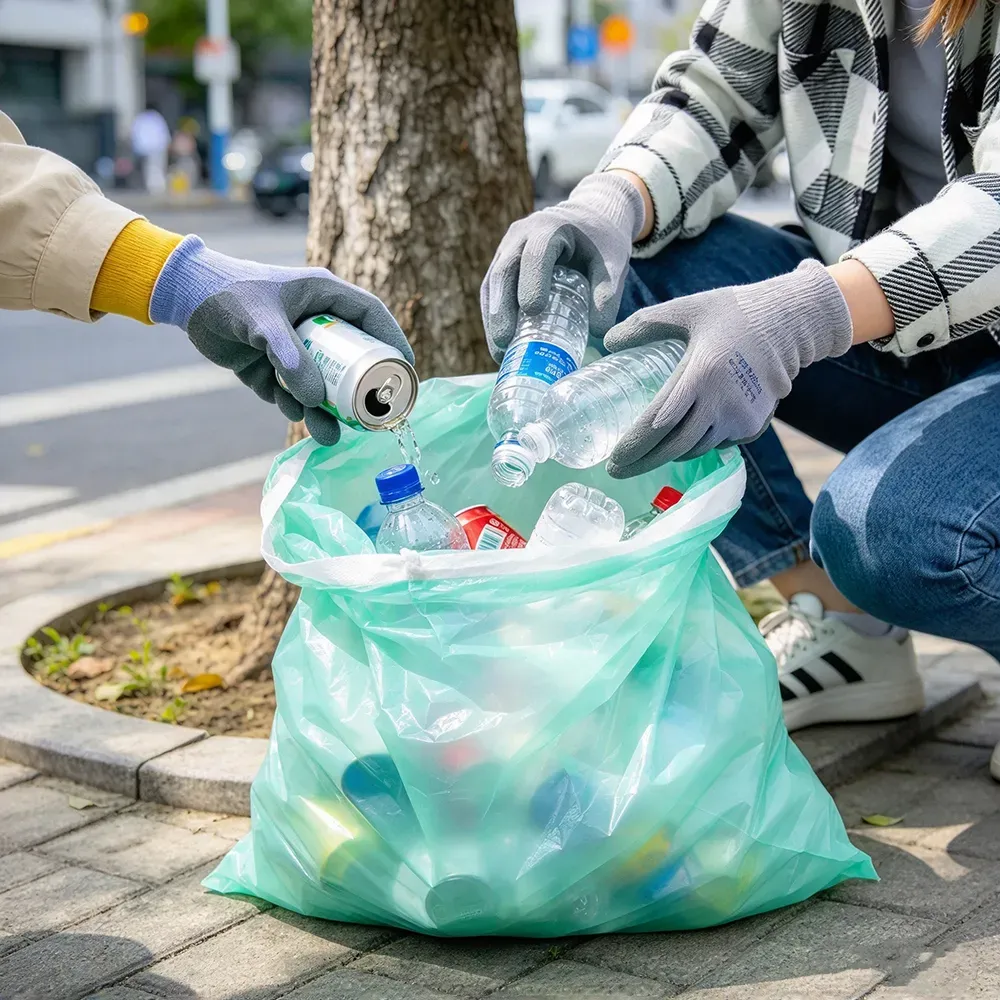
Correct usage can help improve the performance and service life of waste bags while reducing the risk of accidental damage.
Step 1: Select the Correct Bag Size
Choose a bag that matches the dimensions and capacity of the waste bin. A bag that is too small may slip into the bin, while an oversized bag may waste material.
Step 2: Fit the Bag Properly
Open the bag and place it inside the waste container. Fold the upper edge over the rim to keep it in position.
Step 3: Distribute Waste Evenly
Avoid concentrating heavy rubbish in one area. Distribute the contents evenly to reduce stress on the bottom and side seals.
Step 4: Avoid Overfilling
Leave enough space at the top to allow the drawstring to close properly.
Step 5: Pull the Drawstring
Once the bag is full, gently pull the drawstring to gather the opening and secure the contents.
Step 6: Lift and Dispose of the Bag
Use the gathered drawstring to carry the bag carefully. Follow local waste sorting and disposal requirements.
Following these steps helps users get better performance from refuse sacks with drawstring in daily waste management.
Storage Method
Proper storage helps maintain the quality of plastic waste bags and prevents unnecessary material deterioration.
The following recommendations are suitable for distributors, wholesalers, and end users:
Keep Away from Direct Sunlight: Prolonged UV exposure may affect the properties of polyethylene film.
Store in a Dry Environment: Avoid excessive moisture and protect outer packaging from damage.
Maintain a Moderate Temperature: Keep products away from extreme heat and direct contact with heating equipment.
Avoid Heavy Pressure: Do not place excessive weight on packaged bags, as this may deform the rolls.
Keep Away from Sharp Objects: Prevent packaging damage during transportation and warehouse storage.
Use First-In, First-Out Inventory: Rotate stock according to production and delivery dates.
For bulk orders, appropriate carton packaging and palletized transportation can help protect refuse sacks during international shipping.
How to Dispose of Refuse Sacks with Drawstring
The disposal method depends on the bag material, the type of waste inside, and local waste management regulations.
Conventional PE Bags
Conventional LDPE and HDPE bags should be disposed of through appropriate waste collection systems. Where local facilities accept flexible polyethylene films, clean and empty bags may be collected for recycling.
Recycled PE Bags
Bags manufactured with recycled polyethylene should still be sorted according to local waste management requirements. Recycled content does not automatically mean that a product can be recycled through every local collection system.
Biodegradable Bags
Specialized biodegradable products should be disposed of according to their certified specifications and the conditions required for biodegradation.
Compostable Bags
Compostable bags should only be placed in suitable composting systems when the product certification and local facility requirements permit it. Industrially compostable products are not necessarily suitable for home composting.
Consumers and businesses should avoid disposing of plastic waste bags in natural environments or waterways.
Choosing Refuse Sacks with Drawstring
Selecting the right product requires more than comparing the unit price. Buyers should evaluate several specifications to ensure that the bags meet their actual waste collection requirements.
1. Bag Capacity
Determine the required volume according to the waste container. Common commercial options include 30L, 50L, 60L, 80L, and 120L, with other capacities available through customization.
2. Material Selection
Choose LDPE for applications requiring flexibility and good puncture resistance, HDPE for lightweight general waste, or suitable LLDPE blends for improved mechanical performance.
3. Film Thickness
Thickness should match the expected waste weight and type. Thicker film is generally appropriate for heavier or more demanding applications, but the correct specification should be established through product testing.
4. Drawstring Quality
Check the strength, flexibility, and sealing of the drawstring. A poorly manufactured closure may break during pulling or carrying.
5. Bottom Seal Strength
The bottom seal is a critical area of the bag. Strong, consistent sealing helps reduce leakage and product failure.
6. Color Options
Black is widely used for general rubbish collection, while other colors can support waste identification and sorting systems.
7. Printing and Branding
Custom printing can include company logos, product information, usage instructions, and other branding elements.
8. Packaging Specifications
Choose between roll packaging, individual packs, printed labels, and customized cartons according to your distribution requirements.
9. Supplier and Manufacturer Selection
For wholesale buyers, a reliable supplier should offer consistent quality, stable production capacity, customization options, and quality inspection procedures.
Before placing a large order, buyers should request product samples and confirm the bag dimensions, thickness, material composition, closure strength, and packaging details.
Conclusion
Refuse sacks with drawstring are convenient and practical waste collection products for residential, commercial, and industrial environments. Their integrated closure system makes it easier to secure, carry, and dispose of rubbish compared with traditional open-top refuse bags.
Material selection is an important factor in determining product performance. LDPE, HDPE, LLDPE, and recycled polyethylene each offer different advantages depending on the required flexibility, strength, thickness, and purchasing budget.
For wholesalers, distributors, supermarkets, and cleaning service companies, customized refuse sacks can provide a flexible solution for different waste management requirements.
Working with an experienced manufacturer allows buyers to customize bag sizes, capacities, colors, thicknesses, printing, and packaging while maintaining consistent product specifications for bulk supply.
FAQ
Q1: What are refuse sacks with drawstring used for?
Refuse sacks with drawstring are used for collecting, closing, carrying, and disposing of household, office, commercial, and general non-hazardous waste. Their integrated closure makes waste handling more convenient.
Q2: What materials are used to manufacture drawstring refuse sacks?
Common materials include LDPE, HDPE, LLDPE, and recycled polyethylene. The material is selected according to the required strength, flexibility, thickness, and application.
Q3: Are refuse sacks with drawstring stronger than standard refuse bags?
Not necessarily. Their main advantage is the convenient closure design. Actual strength depends on the raw material, film thickness, bag construction, and bottom seal quality.
Q4: What sizes are available for drawstring refuse sacks?
Common capacities include 30L, 50L, 60L, 80L, and 120L. Customized dimensions and capacities can also be manufactured according to customer requirements.
Q5: Can refuse sacks with drawstring be customized?
Yes. Manufacturers can customize bag dimensions, thickness, colors, materials, drawstring specifications, printing, and packaging according to wholesale requirements.
Q6: Are drawstring refuse sacks recyclable?
Polyethylene refuse sacks may be recyclable where suitable collection and processing facilities accept flexible plastic films. Actual recyclability depends on material composition, contamination, and local recycling infrastructure.
Q7: Can I order refuse sacks with drawstring in bulk?
Yes. Professional plastic packaging manufacturers can supply wholesale quantities for distributors, importers, supermarkets, cleaning companies, and commercial customers. MOQ and production lead time depend on product specifications.
Q8: How do I choose the right thickness for refuse sacks with drawstring?
Consider the weight, shape, and type of rubbish. Lightweight household waste generally requires less material, while heavier or irregular waste may require thicker film and stronger seals. Sample testing is recommended before bulk purchasing.
Q9: Can manufacturers produce refuse sacks with recycled materials?
Yes. Recycled polyethylene, including post-industrial and post-consumer recycled materials, can be used depending on the required product specifications and manufacturing capabilities.
Q10: What should I check before purchasing from a refuse sack manufacturer?
Check the manufacturer's production capabilities, raw material options, thickness consistency, drawstring strength, bottom seal quality, customization services, sample availability, and quality control procedures.
