


Product Overview
OPP plastic film is a clear, lightweight, and versatile polypropylene film widely used for packaging, printing, lamination, labeling, and protective applications. OPP stands for Oriented Polypropylene, referring to polypropylene film that has been stretched in a specific direction to improve its strength, clarity, stiffness, and dimensional stability.
Our OPP plastic film is available in different widths, thicknesses, finishes, and surface treatments to meet different packaging and converting requirements. Depending on the application, it can be supplied as transparent film, printed film, coated film, or laminated film.
OPP plastic film is especially suitable for applications where good transparency, attractive appearance, moisture resistance, and reliable mechanical performance are required.
Key Takeaways
- Material: Oriented Polypropylene (OPP)
- Appearance: Clear, transparent, glossy, or customized
- Good Clarity: Provides excellent product visibility
- High Stiffness: Maintains a stable and neat appearance
- Moisture Resistance: Helps protect packaged products from moisture
- Printability: Suitable for various printing processes
- Heat Sealability: Available with heat-sealable grades or coatings
- Applications: Food packaging, retail packaging, labels, stationery, and industrial packaging
- Customization: Thickness, width, surface treatment, printing, and roll length can be customized
- Supply Form: Roll film for automatic and semi-automatic packaging machines
OPP Plastic Film: Context And History
Polypropylene was developed as an important thermoplastic material during the twentieth century and gradually became widely used in flexible packaging. The development of orientation technology allowed polypropylene film to achieve improved tensile strength, clarity, stiffness, and dimensional stability.
This development led to the widespread use of OPP plastic film in flexible packaging and converting industries. Today, oriented polypropylene film is commonly used for food packaging, labels, wrapping films, laminated structures, and retail packaging.
Modern OPP film production also allows manufacturers to provide different surface finishes, coating options, and functional properties according to specific application requirements.
What Is OPP Plastic Film?
OPP plastic film is a polypropylene film that has been mechanically oriented to improve its physical properties. The orientation process stretches the polymer molecules, resulting in a film with better tensile strength, stiffness, transparency, and dimensional stability than conventional non-oriented polypropylene film.
OPP film can be manufactured in different thicknesses and widths and can be further processed through printing, coating, laminating, slitting, and converting.
Depending on the product specification, OPP film may be used as a standalone packaging material or combined with other films to create a multilayer packaging structure.

OPP Plastic Film Vs. BOPP Film
OPP and BOPP are closely related terms and are sometimes used interchangeably in the packaging industry. However, BOPP specifically refers to Biaxially Oriented Polypropylene, meaning the polypropylene film is oriented in both the machine direction and transverse direction.
| Feature | OPP Plastic Film | BOPP Film |
|---|---|---|
| Full Name | Oriented Polypropylene | Biaxially Oriented Polypropylene |
| Material | Polypropylene | Polypropylene |
| Orientation | Depends on film structure | Two-direction orientation |
| Clarity | Good to excellent | Excellent |
| Stiffness | Good | High |
| Printing | Suitable | Excellent |
| Packaging | Widely used | Widely used |
| Common Uses | Packaging, labels, wrapping | Food packaging, labels, lamination |
In commercial packaging, BOPP is one of the most common types of oriented polypropylene film.
Using OPP Plastic Film For Storage And Packaging
OPP plastic film can be used for both primary and secondary packaging depending on the required film structure and product characteristics.
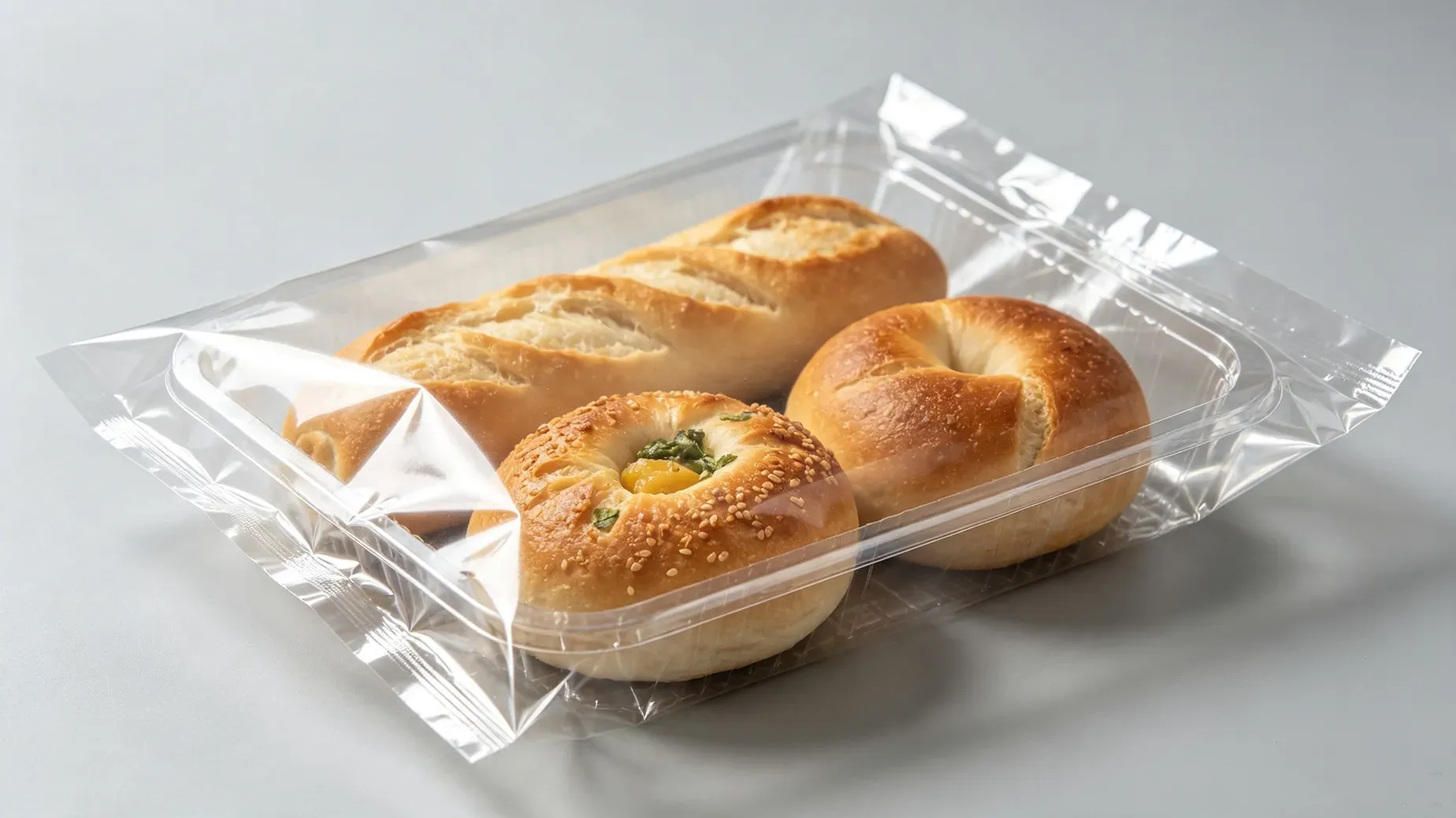
For food and consumer goods, transparent film allows customers to see the packaged product while providing a clean and professional appearance. Its moisture resistance also makes it useful for applications where the packaging needs protection against humidity.
For industrial packaging, OPP film can be converted into bags, wrappers, labels, sleeves, and laminated packaging structures. It can also be supplied in rolls for automatic packaging equipment.
When higher barrier performance or heat sealing is required, OPP can be combined with other materials or supplied with suitable functional coatings.
Composition: Polypropylene-Based Material
OPP plastic film is primarily manufactured from polypropylene resin. Additional additives or coatings may be used depending on the required performance and application.
The final film structure can be designed according to requirements such as:
Transparency
Gloss
Stiffness
Tensile strength
Surface friction
Print adhesion
Heat sealing
Moisture resistance
Barrier performance
Common Materials Used In OPP Plastic Film
| Material / Structure | Main Characteristics | Typical Applications |
|---|---|---|
| Clear OPP | Transparent, glossy, lightweight | Wrapping, packaging |
| BOPP Film | Strong, clear, stiff | Food and consumer packaging |
| Matte OPP | Soft visual appearance | Premium packaging, labels |
| Coated OPP | Improved surface functionality | Printing and specialty packaging |
| Heat-Sealable OPP | Suitable for sealing | Automatic packaging |
| Metallized OPP | Improved light and barrier properties | Snack and food packaging |
| Printed OPP | Customized graphics | Branding and retail packaging |
Characteristics Of OPP Plastic Film
OPP plastic film offers a combination of optical, mechanical, and processing properties that make it suitable for many flexible packaging applications.
High Transparency
Clear OPP provides excellent product visibility and helps create an attractive packaging appearance.
Good Stiffness
The film has good rigidity compared with many conventional flexible films, helping packages maintain their shape.
Good Tensile Strength
Orientation improves the mechanical strength of the film and allows it to perform well during packaging and converting.
Moisture Resistance
Polypropylene provides good resistance to moisture, making OPP film suitable for many dry-product packaging applications.
Excellent Surface Appearance
Glossy and transparent surfaces can enhance product presentation and provide a clean retail appearance.
Printing Compatibility
OPP can be treated or coated to improve ink adhesion and support high-quality flexographic, gravure, or other printing processes.
Advantages Of OPP Plastic Film
Choosing OPP plastic film can provide several advantages for packaging manufacturers, converters, and brand owners.
Excellent Clarity: Helps products remain visible through transparent packaging.
Good Strength: Provides reliable mechanical performance during handling.
Lightweight: Reduces packaging material weight compared with some traditional alternatives.
Moisture Resistant: Helps protect products from humidity.
Good Stiffness: Creates a neat and professional package appearance.
Good Printability: Supports customized graphics and brand information.
Versatile Processing: Can be printed, coated, laminated, slit, and converted.
Wide Applications: Suitable for food, retail, stationery, labels, and industrial packaging.
Customizable: Thickness, width, finish, roll length, and other specifications can be adjusted.
Application Scenarios For OPP Plastic Film
OPP plastic film is widely used in different packaging and converting applications.
Food Packaging
Used for packaging snacks, biscuits, confectionery, bakery products, dried foods, and other consumer food products when the required film structure meets food-contact requirements.
Retail Packaging
Suitable for wrapping and presenting consumer products where product visibility and appearance are important.
Labeling
OPP film can be used as a label material because of its clarity, stiffness, moisture resistance, and printability.
Stationery Packaging
Used for wrapping notebooks, cards, folders, books, and other stationery products.
Flower And Gift Packaging
Transparent OPP film is commonly used for decorative wrapping, flower bouquets, gift baskets, and retail presentation.
Industrial Packaging
Can be converted into protective wraps, sleeves, bags, and laminated structures for selected industrial products.
Laminated Packaging
OPP can be laminated with PE, CPP, PET, aluminum foil, or other functional layers to achieve specific mechanical, sealing, or barrier properties.
How To Use OPP Plastic Film Effectively
When using OPP plastic film, the correct film specification should be selected according to the packaging machine, product requirements, printing process, and final packaging structure.
Before production, consider:
Film Thickness: Select the appropriate thickness according to strength and packaging requirements.
Film Width: Match the width with the converting or packaging equipment.
Surface Treatment: Choose treated film when printing or coating is required.
Sealing Requirements: Use a suitable heat-sealable structure when heat sealing is necessary.
Printing Requirements: Confirm ink adhesion and surface treatment requirements before printing.
Barrier Requirements: Consider coating or lamination when higher oxygen, moisture, or light protection is needed.
Storage Method
Store OPP plastic film in a clean, dry, and ventilated warehouse away from direct sunlight, excessive heat, moisture, and chemical contamination.
Keep rolls properly packaged during storage and avoid heavy pressure or rough handling that could cause deformation or damage.
For best processing performance, allow the film to reach the recommended production environment before use, especially when there are significant differences between storage and production temperatures.
How To Dispose Of OPP Plastic Film
The disposal method for OPP plastic film depends on the local waste-management system and the specific film structure.
Where plastic film recycling is available, clean and uncontaminated OPP film may be collected and sent to an appropriate recycling facility. Printed, coated, metallized, or laminated structures may require different recycling processes.
For commercial packaging projects, buyers should check local recycling regulations and confirm whether the selected film structure is accepted by the relevant recycling system.
OPP should not automatically be described as biodegradable. Conventional polypropylene is a plastic material designed for durability rather than biodegradation.
Choosing OPP Plastic Film
When selecting OPP plastic film, buyers should consider the final application rather than choosing the lowest-cost film alone.
Material Requirements
Confirm whether standard OPP, BOPP, coated OPP, heat-sealable OPP, or a laminated structure is required.
Thickness
Film thickness should be selected according to the required strength, stiffness, appearance, and packaging process.
Width And Roll Length
The roll width and winding specifications should match the customer's packaging or converting equipment.
Printing Requirements
For printed packaging, confirm surface treatment, ink compatibility, printing method, and color requirements.
Food Contact Requirements
For food packaging, select materials that meet the applicable food-contact regulations and obtain the necessary compliance documentation and test reports.
Customized Specifications
A professional OPP film manufacturer can provide customized thickness, width, roll length, surface treatment, printing, coating, and packaging specifications according to project requirements.
Conclusion
OPP plastic film is a versatile polypropylene packaging material offering good clarity, stiffness, tensile strength, moisture resistance, and processing performance. Its combination of appearance and functionality makes it suitable for food packaging, retail products, labels, stationery, gift wrapping, and various industrial applications.
For more demanding packaging requirements, OPP can also be printed, coated, or laminated with other materials to create a customized packaging structure.
When purchasing OPP film, buyers should consider material structure, thickness, width, surface treatment, sealing performance, printing requirements, regulatory compliance, and intended application. Choosing the correct specification can improve packaging performance while reducing unnecessary material costs.
FAQ
Is OPP plastic film the same as BOPP film?
Not exactly. OPP means oriented polypropylene, while BOPP specifically refers to biaxially oriented polypropylene. BOPP is one of the most widely used forms of oriented polypropylene film.
Is OPP plastic film waterproof?
OPP has good resistance to moisture and water compared with many paper-based packaging materials. However, water resistance does not necessarily mean the film structure is completely waterproof under every condition.
Can OPP plastic film be printed?
Yes. OPP can be surface-treated or coated to improve ink adhesion and can be used with various commercial printing processes.
Is OPP plastic film recyclable?
Conventional polypropylene film can be recyclable where suitable collection and recycling systems are available. Actual recyclability depends on local facilities and whether the film is laminated, coated, metallized, or contaminated.
Is OPP plastic film biodegradable?
Standard OPP is not considered biodegradable. It is a polypropylene-based plastic material designed for durability and packaging performance.
What thicknesses are available for OPP plastic film?
Common thicknesses vary according to the application, film structure, and converting process. Customized thicknesses can be supplied according to customer requirements.
Can OPP film be heat sealed?
Some OPP structures are heat sealable, while standard OPP may require a suitable sealing layer or coating. The correct grade should be selected according to the packaging machine and sealing temperature.
Can OPP plastic film be customized?
Yes. Width, thickness, roll length, surface treatment, finish, printing, coating, and laminated structure can be customized for different packaging applications.
What products can be packaged with OPP film?
Common applications include snacks, biscuits, confectionery, bakery products, stationery, flowers, gifts, retail products, labels, and other dry or lightweight consumer goods.
How should OPP plastic film be stored?
Store the film in a dry, clean, and ventilated environment away from direct sunlight, excessive heat, moisture, and chemical contamination. Proper storage helps maintain film quality before processing.

